How to Prepare (Quick Checklist)
Tip: If you’re unsure about filter size, snap a photo of your current filter label.
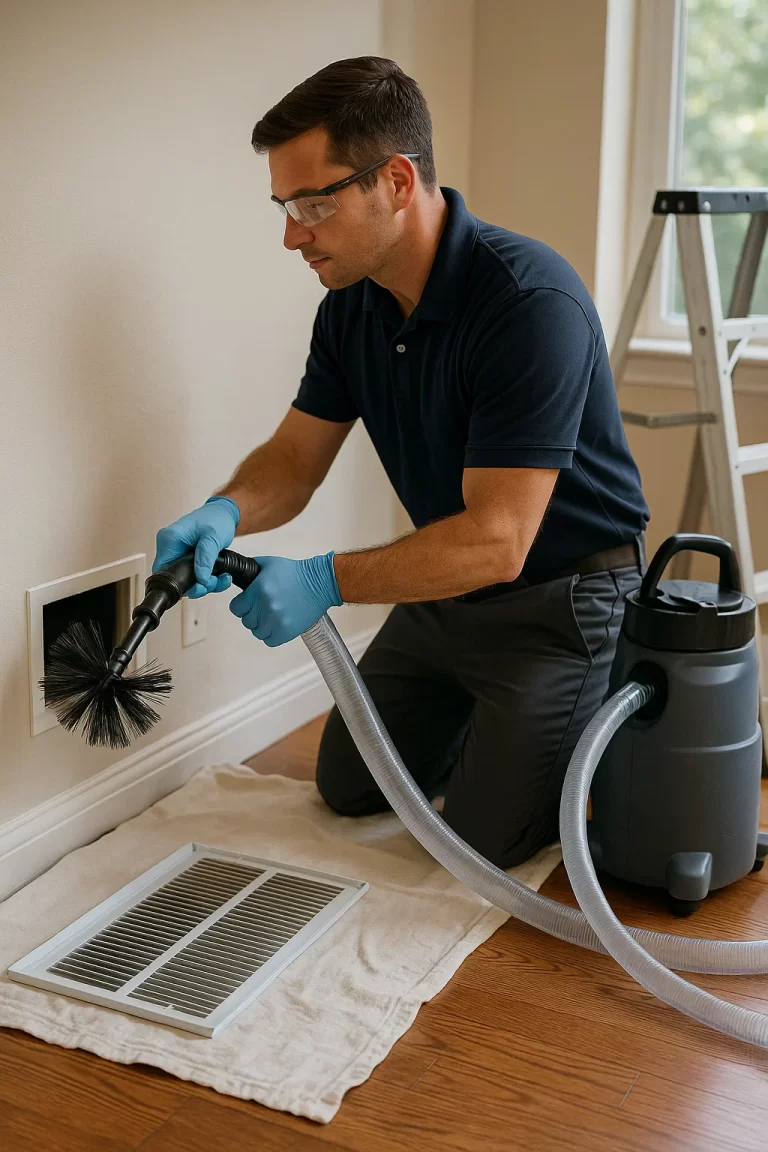

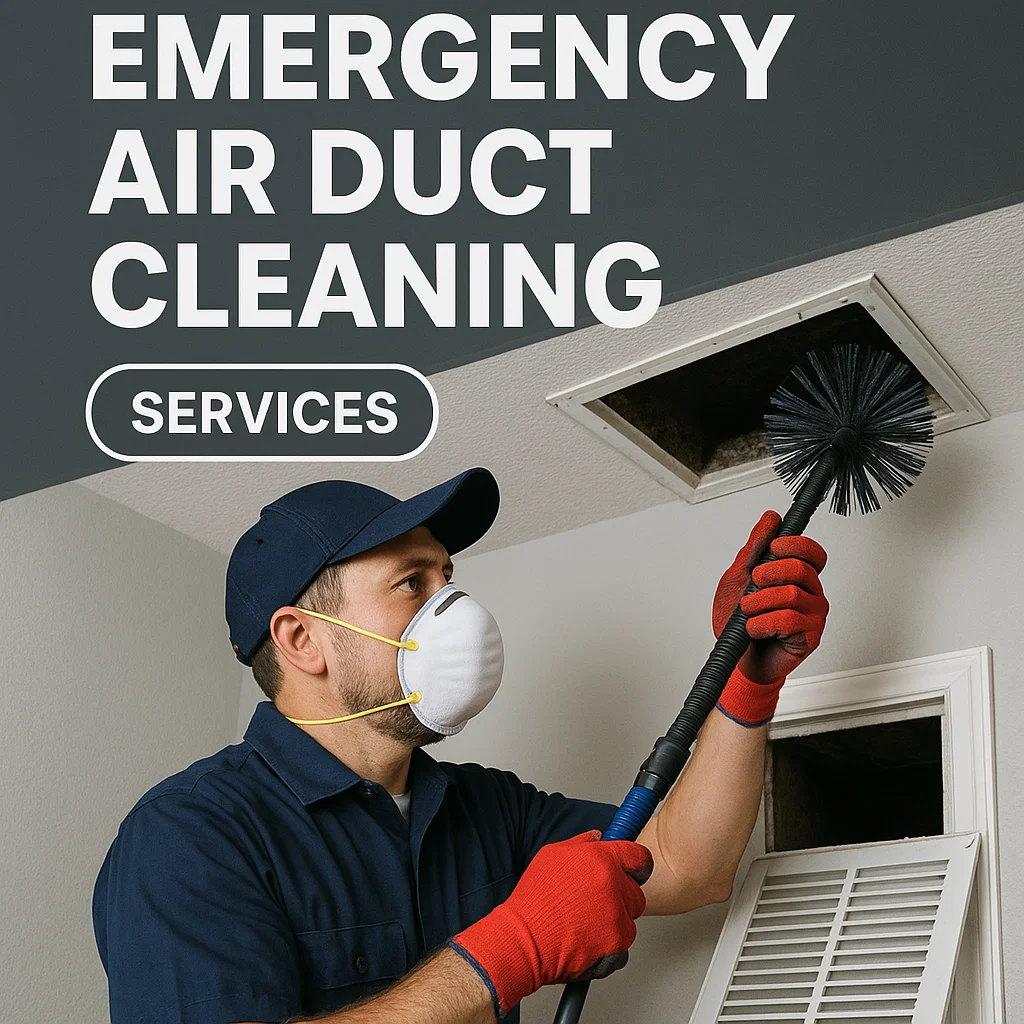
Our crews follow NADCA standards and use the Rotobrush® air duct cleaning system with HEPA filtration to brush and vacuum debris from each duct and main trunk right at the source.
In the past decade, Angelo’s has cleaned more than 60,000 vent openings and over 1,000 complete air duct systems throughout the Philadelphia suburbs, so you can schedule with confidence.
We remove dust, dander, and other contaminants from your system, clean the main trunks to the air handler, and apply an odor-encapsulating treatment so your ducts run cleaner, fresher, and more efficiently.
Commercial & Multi-Unit Notes
For offices, clinics, and shared buildings, we coordinate with facility managers for access, staging, and after-hours options. We can phase work by suite or floor to keep operations running smoothly.
Questions About Odors or “Mold”?
Surface discoloration or stale odors don’t always indicate active microbial growth. Cleaning removes the dust that odors cling to; odor-control applications are available when appropriate. If we see conditions that require remediation beyond cleaning, we’ll explain what we’re seeing and recommend next steps.
How Often Should Ducts Be Cleaned?
Intervals vary. Homes with shedding pets, recent remodeling, or allergy sensitivities usually benefit from more frequent cleanings. Vacation homes or newer systems may go longer between visits. Your technician can suggest a sensible interval based on what we find inside your ducts—not a one-size-fits-all schedule.
When Specialized Methods Are Used
Angelo’s employs contact cleaning tools (e.g., rotating brush with on-tool HEPA capture) and can pair them with negative-air collection when layout or debris load warrants it. The method is selected for effectiveness and to protect duct materials and seals.
Experience
Quick, tap-to-check guides you can use on the day of service. Everything below is centered and easy to read on mobile.
Tip: If you’re unsure about filter size, snap a photo of your current filter label.
Good to know: Keeping up with filters and seasonal settings helps your ducts stay cleaner, longer.
Cleaner ducts, balanced airflow, and careful service around your home—done by a team that treats every register and trunk line with detail.
Some of Our Business Clients :











Setup Mats and Covers
Vent Brush Procedure
Supply Trunk Extraction
Close‑Out and Tips
Angelo’s Hard Floor & Duct Cleaning schedules a defined arrival window and a brief walk-through when we arrive. We confirm the system layout, note any special concerns (allergies, recent renovations, pets, nursery rooms), and choose the best cleaning approach for your home’s ductwork and air handler. Most residential jobs are completed in a single visit without disrupting your day.
How to Prepare (Quick Checklist)
• Clear a small working area around the furnace/air handler (about the size of a card table).
• Make sure we can easily reach supply and return vents—move light furniture or rugs where possible.
• Secure pets and let us know about any rooms that should remain closed.
• If registers are painted shut or caulked in place, tell us beforehand so we can plan around them.
• Have a standard filter on hand if you’d like us to swap it at the end of service.
After Your Cleaning (Simple Care Tips)
• Replace or upgrade your filter on schedule; most homes do best with MERV 8–11 unless your HVAC pro specifies otherwise.
• Run the system fan for 15–30 minutes after service to circulate fresh air through the system.
• Dust high, then low, on the same day—any settled particles are easily removed after the ducts are cleaned.
• If you use a humidifier, check pads and settings at the start of the heating season.
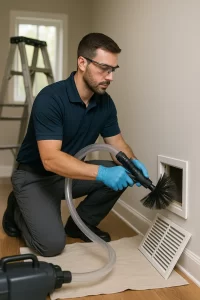
Included: Per-vent contact cleaning with HEPA capture, cleaning of the main supply/return trunks up to the air handler, and a basic check of your filter and accessible humidifier components. A deodorizing/odor-encapsulant can be applied on request for a fresher start.
Not included: HVAC repair, duct sealing, coil or blower motor rebuilds, asbestos abatement, or cosmetic work (we don’t paint/caulk registers or patch drywall). Sections that are unsafe, damaged, or inaccessible may be excluded—your technician will point these out and document them.
Noise, Safety & Home Care
Our equipment hums like a strong vacuum. We use corner guards, drop cloths, and protective footwear as needed to keep floors and trim safe. Doors may open briefly while we stage hoses; please let us know if temperature control is critical for a family member or pet so we can minimize drafts.
When Specialized Methods Are Used
Angelo’s employs contact cleaning tools (e.g., rotating brush with on-tool HEPA capture) and can pair them with negative-air collection when layout or debris load warrants it. The method is selected for effectiveness and to protect duct materials and seals.
Good Times to Book
• After interior construction or sanding projects
• When moving into a home with unknown maintenance history
• If you notice persistent dust near registers or musty odors when the system starts
• Before a new baby, housemate with allergies, or elderly parent moves in
Cleaner ducts, fresher airflow, and professional air duct cleaning service—from first call to final walkthrough.
We noticed less dust on surfaces within days of our air duct cleaning. The tech cleaned every supply and return vent and showed us the debris captured in their HEPA unit. Courteous, efficient, and zero mess.
Airflow to our upstairs rooms is finally balanced after Angelo’s air duct cleaning. They brushed the vents, cleaned the main trunks to the air handler, and swapped our filter. House feels fresher already.
Professional from start to finish. The crew explained each step of the duct cleaning, cleaned all returns, and confirmed everything at the thermostat. They even labeled our filter size for next time—super helpful.
We scheduled air duct cleaning for our office and showroom. Minimal downtime, clear communication, and a thorough clean on both supply and return runs. We’ll use Angelo’s for routine air duct maintenance.
The team was careful around furniture and took time to protect floors during the duct cleaning. They brushed each vent and showed photos from inside the ducts—night and day difference afterward.
We had a renovation and wanted the dust out of our system, so we booked air duct cleaning with Angelo’s. They cleaned the trunks back to the air handler and recommended a better filter range for our setup. Great work.
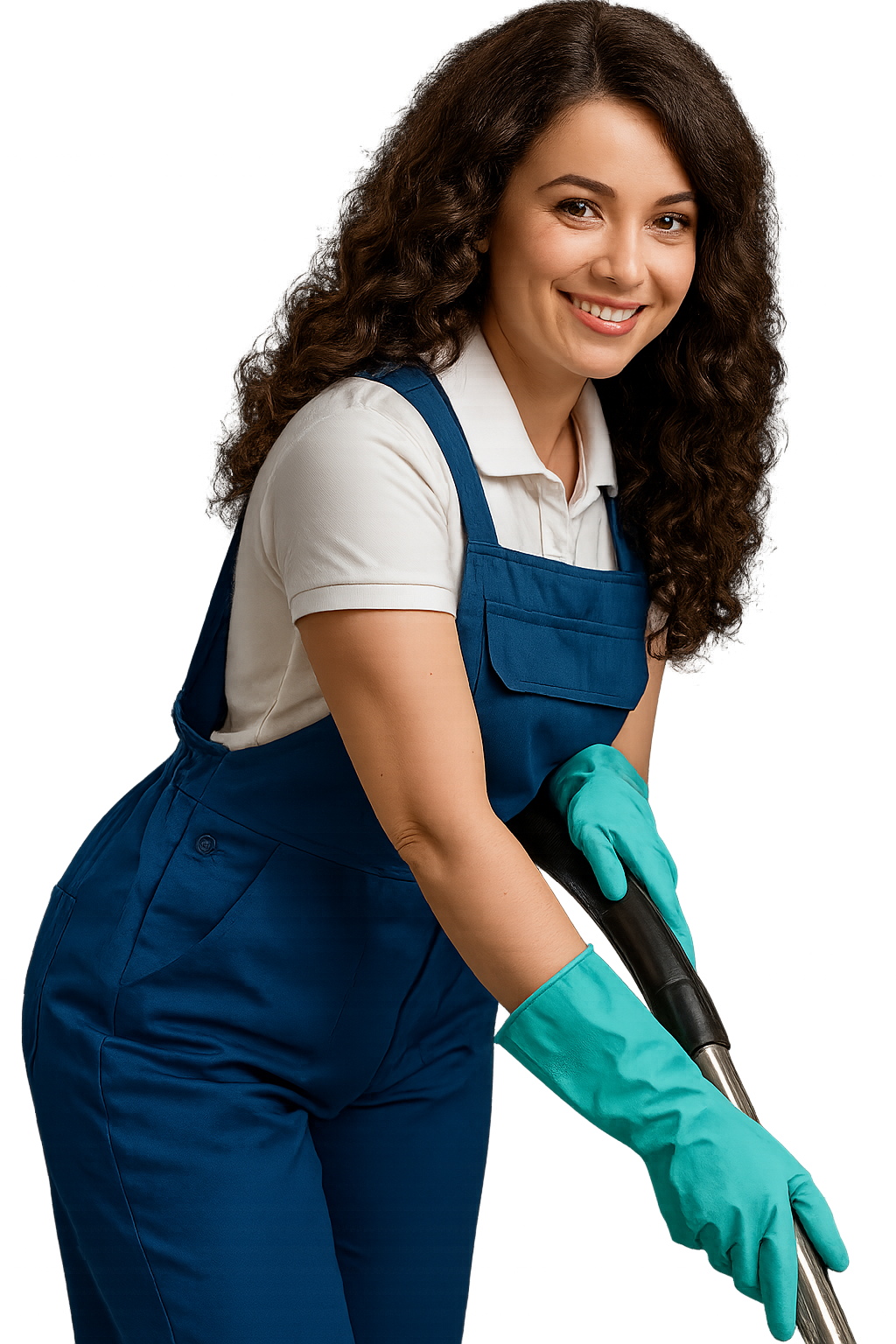
The goal is to extract dust, pet dander, hair, construction debris, and loose particulate that settle inside supply and return runs—not to sterilize the system. Angelo's Hard Floor & Duct Cleaning uses per-vent contact tools with on-tool HEPA capture so debris is lifted and contained at the source. We also address the main supply/return trunks up to the air handler and clean accessible grilles/registers. If we find items like screws, toys, or insulation fragments, we remove and document them.
We match the method to your duct materials and layout. Our default is per-vent rotating-brush contact cleaning with HEPA capture because it scrubs each run while controlling dust. When layout, debris load, or access points warrant it, we can pair contact cleaning with negative-air collection for continuous draw. Your technician explains the plan up front and can show before/after images on request.
Included: per-vent contact cleaning with HEPA capture, cleaning of main trunks to the air handler, light cleaning of grilles/registers, a filter check, and a quick look at accessible humidifier components. An odor-encapsulant can be applied at the end on request.
Not included: HVAC repair, duct sealing, coil/blower rebuilds, asbestos abatement, or cosmetic work (painting/caulking registers, patching drywall). Unsafe, damaged, or inaccessible sections are documented and discussed.
Cleaning reduces stored dust inside the ducts, which often helps—especially after renovations or in homes with shedding pets. It isn’t a cure-all. Good filtration, sealing leaks, source control, and clean coils matter too. We note root-cause issues we see so you can make improvements that complement cleaning.
Intervals vary. Homes with pets, recent remodeling, or occupants with respiratory sensitivities benefit from more frequent cleanings; newer, well-filtered systems can go longer. Schedule when you see visible debris at registers, notice musty start-up odors, or after major interior projects. Your technician will suggest a sensible cadence based on what we find.
Not when done correctly. We use soft, properly sized brushes and controlled torque to protect flex and lined ducts, and we avoid aggressive tools that could tear liners or disturb insulation. Preserving your duct integrity is non-negotiable for us.
Only when needed for proper cleaning and always with your approval. If we create an opening, we install a code-compliant access panel and seal it to maintain pressure and efficiency. Location is shown and documented for your records.
Clear a small area around the furnace/air handler, make registers easy to reach by moving light items or rugs, and secure pets. Tell us about rooms that must stay closed and any registers that are painted or caulked in place so we can plan around them. Have a fresh filter ready if you want us to install it.
Many stale odors come from dust films that hold smells; thorough cleaning often resolves them. When appropriate, we apply an odor-encapsulant at the close of service (unscented/low-odor options available). If we see conditions suggesting microbial growth beyond cleaning, we will explain findings and recommend next steps—no scare tactics or unnecessary foggers.
Cleaning can help where debris partially blocks branch runs or registers, but the biggest efficiency gains usually come from sealing duct leaks, using the right filter, and keeping coils clean. We point out opportunities we see—like crushed flex runs or overly restrictive filters—so you can make targeted upgrades.
We stage equipment thoughtfully, use corner guards and drop cloths where needed, and wear protective footwear. Hoses are routed to minimize contact with walls and trim, and HEPA capture prevents particulates from re-circulating. Doors may open briefly while we stage; tell us if temperature control is critical so we can minimize drafts.
Standard duct cleaning focuses on the ductwork. We inspect visible components and will note heavy soil or biofilm on coils or blower assemblies. Coil cleaning is a specialized service quoted separately or referred to your HVAC provider. Clean coils and proper filtration help ducts stay clean longer.
Yes. We can capture images at representative supply/return runs and at the trunks so you can see initial condition and results. Visuals also help us recommend a maintenance interval tailored to your system rather than a generic schedule.
We don’t force off registers that are painted or caulked because that risks finish and drywall damage. If you want those removed, a painter or handyman should free them beforehand. Otherwise we clean through the available opening or document exclusions. Transparency about limitations is part of our service ethic.
Run the system fan for 15–30 minutes to circulate air through the newly cleaned runs. Use a quality filter (many homes do well with MERV 8–11 unless your HVAC pro specifies otherwise) and replace it on schedule. After service, a quick high-to-low dusting captures any settled particles; check humidifier pads and settings at the start of the heating season.