
Hardwood Floor Cleaning • Restore Before Refinishing
When cleaning is enough, when a protective refresher helps, and how to decide before you spend on sanding.
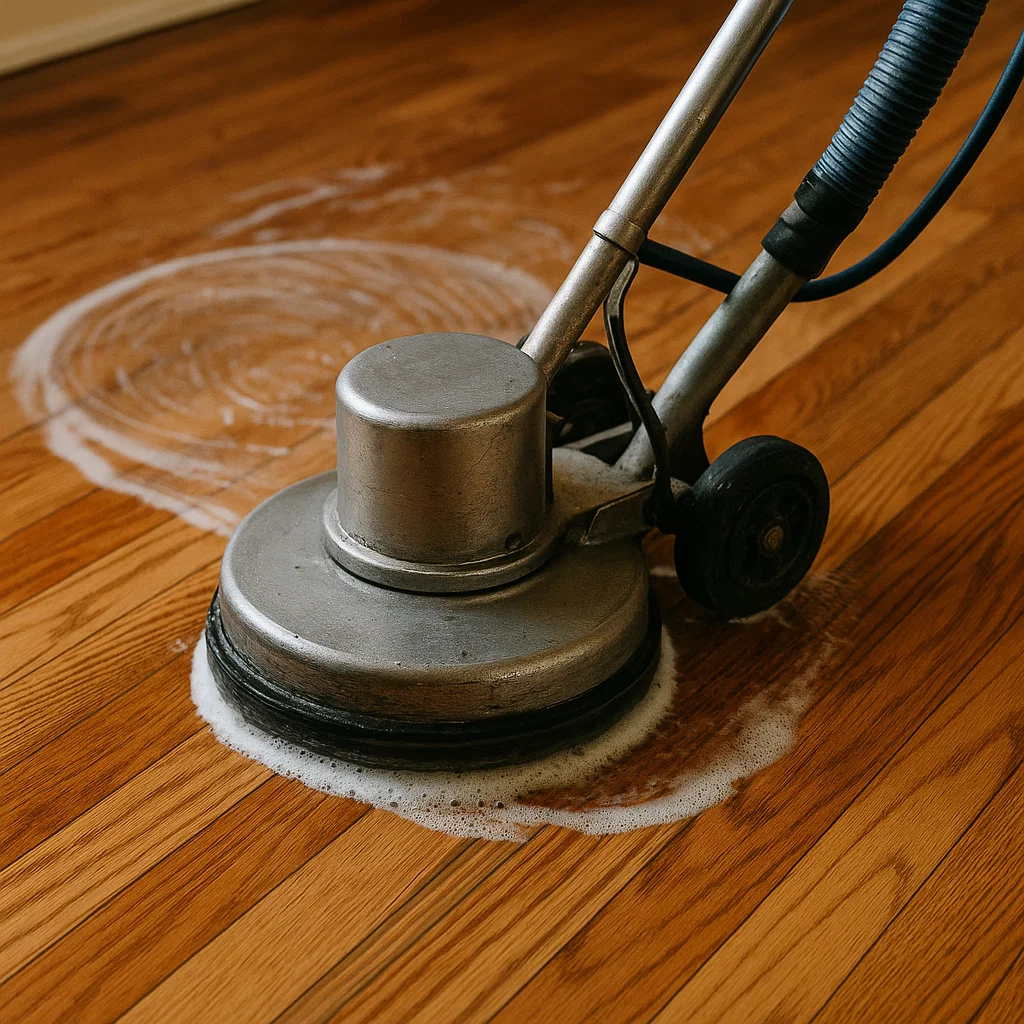
Sanding is a major project: dust control, color decisions, and days of downtime. It’s the right call for wood‑level damage—deep scratches through color, heavy pet staining, cupping, or a new color choice. But if your complaint is haze, sticky feel in the kitchen, or dull traffic lanes, the problem usually lives in the top layer of the finish. A professional deep clean costs less, is far faster, and often delivers the “wow” you’re hoping for.
Residue builds slowly: a spritz of the wrong cleaner, airborne kitchen oils, feet in socks or slippers that track a little moisturizer. Micro‑grit (salt, sand, dust) scuffs that film. Light scatters instead of reflecting evenly, and the floor looks gray. Because the wood is protected beneath the finish, removing the film restores clarity without cutting into the color.
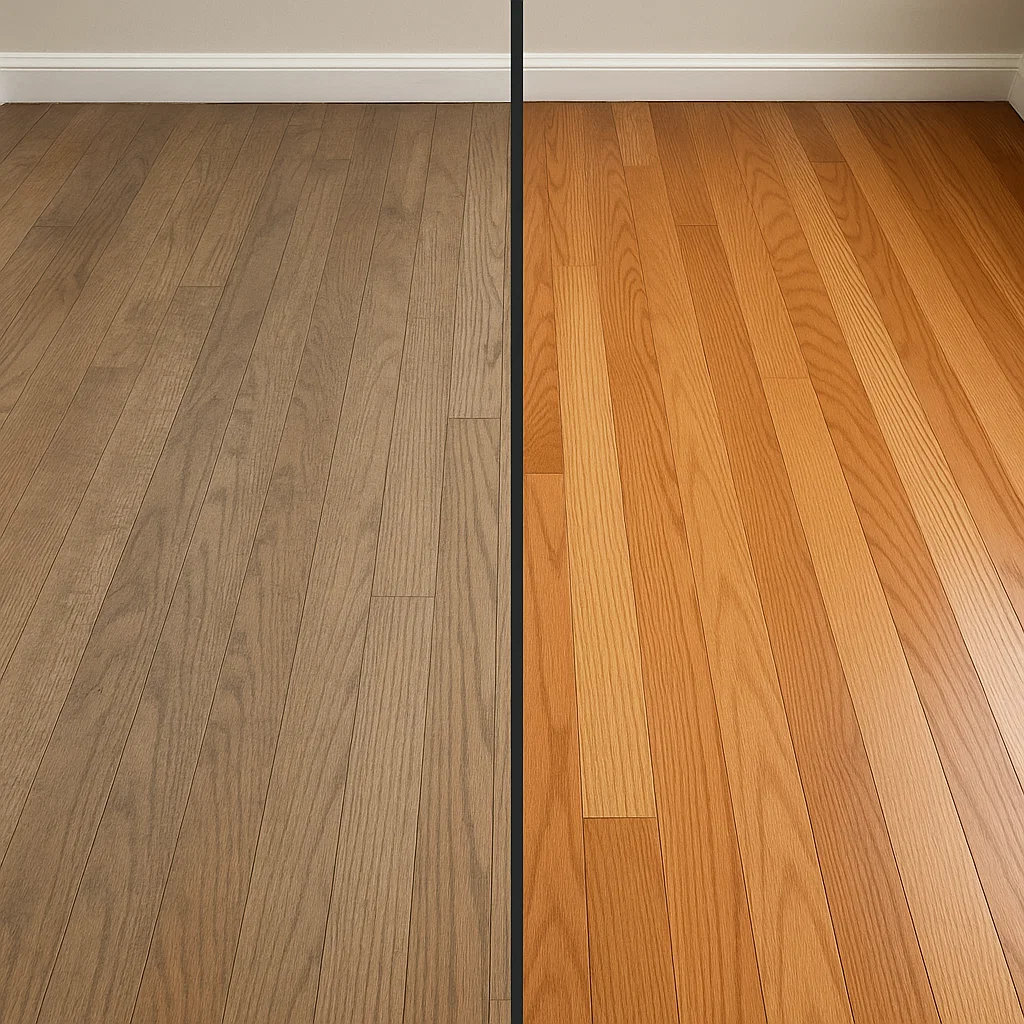

Professional cleaning: typically completed in a few hours, light use shortly after. You can keep cooking and living in the space the same day. Costs a fraction of sanding.
Refinishing: multi‑day process plus cure time. Incredible for damaged floors or color changes, but more expensive and disruptive.
We can often remove acrylic builds, but it may take additional steps. Let us know what brand you used so we plan the safest path.
No—deep gouges require sanding or board repair. Cleaning improves overall appearance but doesn’t change wood color or heal damage.
No. Professional refreshers are designed to be slip‑resistant when applied correctly. They also make weekly cleaning easier.
Photos help us estimate and prioritize rooms. For firm pricing we’ll confirm onsite square footage and finish type.
Many store “gloss” products are acrylics. They look good for a week and then scuff. Layered acrylic can cross‑link and trap dirt, making the floor harder to clean. Removing it safely requires the right chemistry and contained agitation so the solution doesn’t spread to baseboards. We do this work regularly and can tell you what to expect based on the brand and how many layers are present.
A Collegeville homeowner called about refinishing a 200‑sq‑ft kitchen. The floor looked gray with dull paths by the stove and sink. Our test patch brightened immediately. After cleaning and an optional refresher, the family canceled plans to sand the open‑concept space and put the savings toward a new backsplash instead.