
Carpet Stretching & Repair • Repairs
Pet Damage, Burns & Split Seams: Common Carpet Repairs Explained
Small problems don’t have to become big ones. Here’s how we patch, re‑bond, and re‑stretch for strong results.
Repairs that restore the room
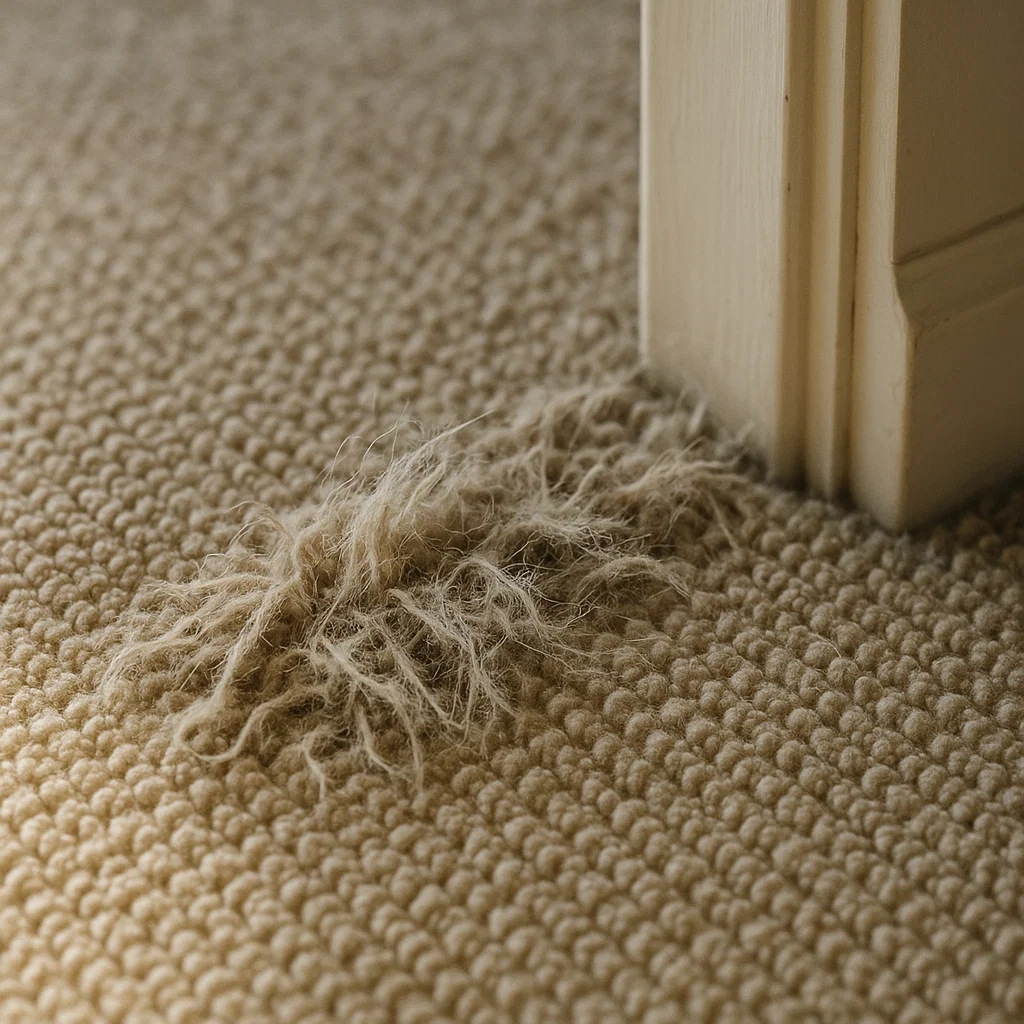
Kids, pets, and everyday life are hard on carpet. The good news: many issues are localized and can be repaired without replacing the entire room. We handle pet scratches at doorways, small burns, iron marks, pulled loops on Berber, and split seams. The shared goal for every repair is strength and a blend that looks natural from standing height.
Patch repairs done right
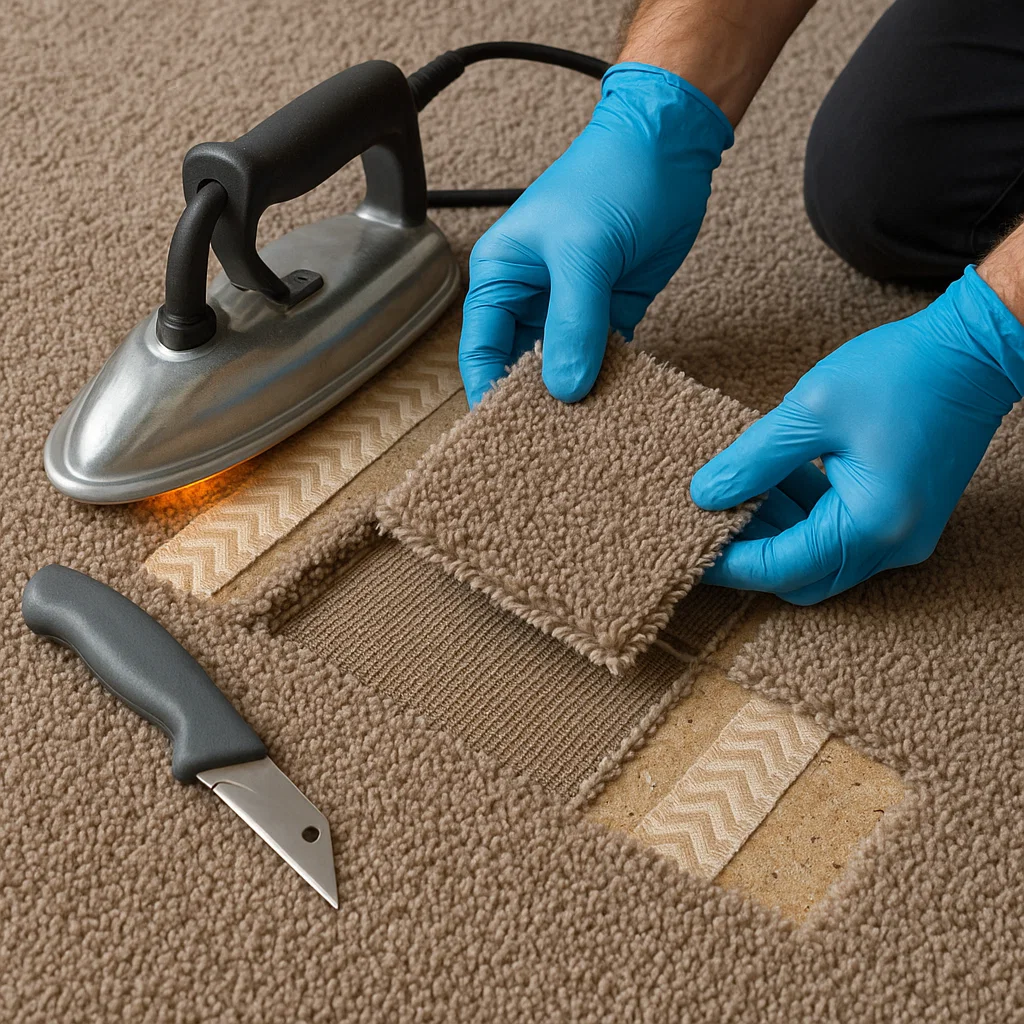
For small holes, bleach spots, or burns, we cut a clean, square section and install a donor piece from remnant or a hidden area such as a closet. The new piece is bonded with heat‑activated seam tape and a seaming iron beneath the pile. We align the nap direction so it wears uniformly and groom the fibers so the perimeter blends.
Seam failures
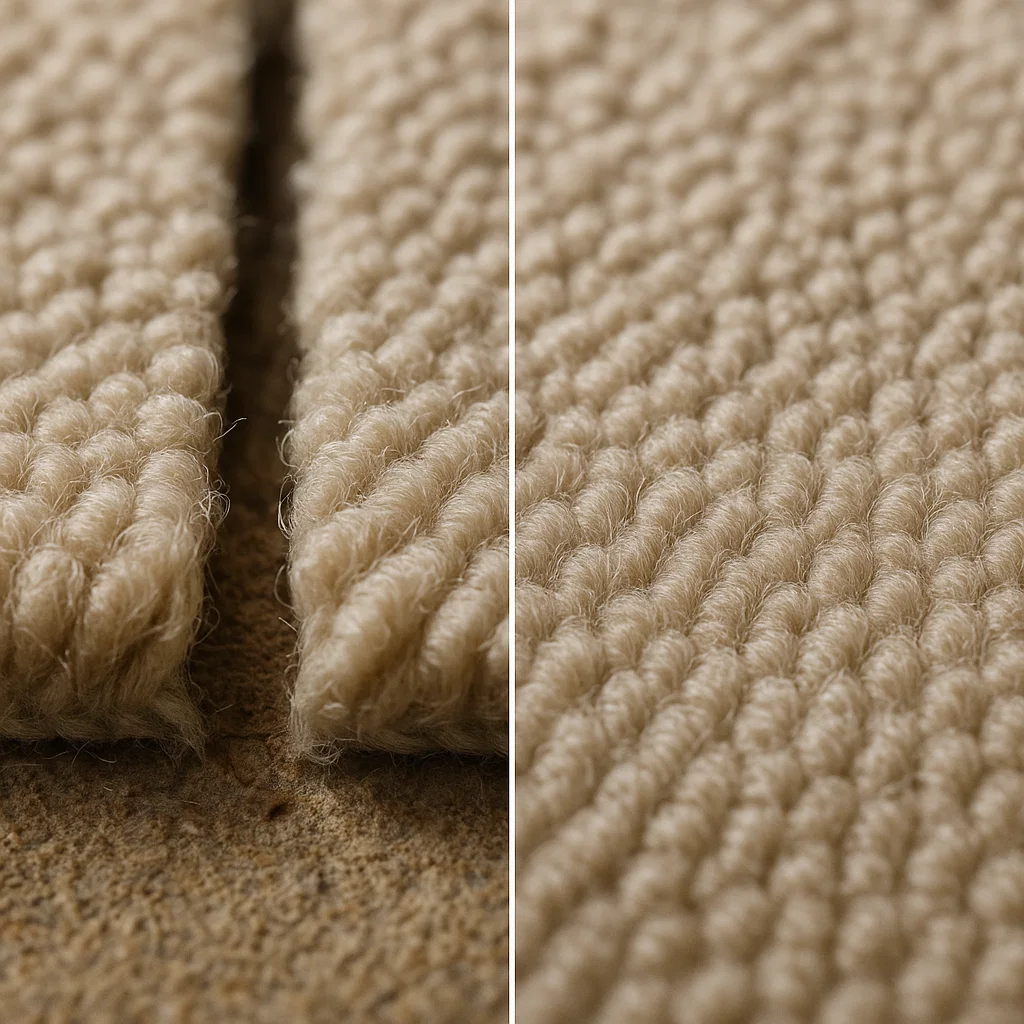
Seams open when seam tape loses bond, when heavy traffic crosses a poorly aligned join, or when a carpet that wasn’t properly stretched shifts and pulls. We remove the old adhesive, apply new seam tape, and re‑bond the edge with the pile opened to protect fibers. A quick re‑stretch across the seam often prevents a repeat failure.
Pet damage at thresholds
Pets try to dig under closed doors, tearing tufts at the threshold. If fibers are merely lifted, a re‑stretch and re‑tuck can close the gap. When tufts are missing, we perform a small patch and blend it into the doorway. We’ll also discuss door sweeps or training aids so curious paws don’t find the same spot again.
When repairs aren’t appropriate
- Large areas of UV fading or heavy fiber loss across the whole room.
- Delamination or brittle backing that crumbles when lifted.
- Extensive pet contamination that reaches pad or subfloor.
Bleach spots vs. stains
Bleach removes dye; stains add color. Cleaning helps stains, not dye loss. For bleach spots we patch with matching donor or perform a small dye repair where appropriate. We set expectations realistically—at standing height your eye should no longer be drawn to the area.
How we blend patches
- We orient nap so light reflects the same direction.
- We choose seam locations along tuft rows for a natural join.
- After heat bonding, we cool under weight so the seam sets flat.
- We groom fibers across the perimeter so the edge softens visually.
What we need from you
- Any leftover remnant from the original installation.
- Access to a closet or corner for donor if no remnant exists.
- Clear space around the repair site and note any hidden wiring near thresholds.
Timeline
Most single repairs take 45–90 minutes. Multiple patches or seam re‑bonds add time, especially if we also perform a stretch to stabilize the area.
Repairs we combine with stretching
Movement can stress seams and edges. If we see a threshold lift or a seam beginning to smile, we’ll stabilize it after stretching so the fix holds. This combined approach saves a visit and keeps the room looking consistent.
After‑care for repaired areas
- Avoid dragging furniture across a fresh patch for 24 hours.
- Vacuum with moderate suction and a height setting that glides—not digs—into the pile.
- For pets who love a specific doorway, add a sweep or gate to remove the temptation.
Why choose Angelo’s for repairs
- Remnant sourcing help and closet donor strategies for a tight visual match.
- Seam bonding with heat and pressure for strength, not just surface glue.
- Transparent guidance on when a repair will blend beautifully—and when replacement is the honest call.
Repair menu at a glance
- Threshold re‑tuck: For lifted edges where fibers are intact.
- Bonded insert (patch): For burns, dye loss, and small holes.
- Loop repair: Secure, back‑bond, and trim a traveling loop.
- Seam re‑bond: Replace old tape and reset alignment.
- Stretch + repair: Stabilize movement and fix the damage in one visit.
Setting expectations
Every repair aims to look natural from standing height under typical lighting. Up close you may still notice where fibers meet. Over a few weeks of normal traffic and vacuuming, edges “soften” visually as the pile blends. We’ll gladly show you completed examples so you know exactly what to expect.
FAQ
Will I see the patch?
At kneeling distance you may notice a perimeter initially, but from standing height it should blend well—especially after a few weeks of normal wear.
What if I don’t have leftover carpet?
We can often harvest a donor from the back corner of a closet and replace that area with a close match. We’ll discuss options on site.
Do you repair Berber pulls?
Yes. We secure the loop, trim the tail, and, if needed, patch a small section to match the loop pattern.
How lighting and pile direction affect the look
Carpet is a directional surface. Sunlight from a window can make one side of a patch look slightly lighter until the pile settles. That isn’t a color mismatch—it’s how the fibers reflect. We orient nap correctly and groom the blend, and normal traffic softens any remaining outline over the next few weeks.
Guarantees & durability
Repairs are built to last. Heat‑bonded seams cure under pressure, and our bonded inserts are sized to the backing grid so load spreads evenly. If an area we repaired loosens under normal use, call us—we’ll assess and make it right within the scope of the job.
Quick recap
- Patches fix burns and bleach spots with donor carpet and heat‑bonding.
- Seam re‑bonds close smiles and splits, especially after a stabilizing stretch.
- Threshold repairs stop pet damage from returning and keep edges crisp.