Carpet Ripples & Wrinkles: Why They Happen—and How We Fix Them
Ripples are a tension problem—not a cleaning problem. Here’s how Angelo’s restores a flat, safe surface with proper power stretching.
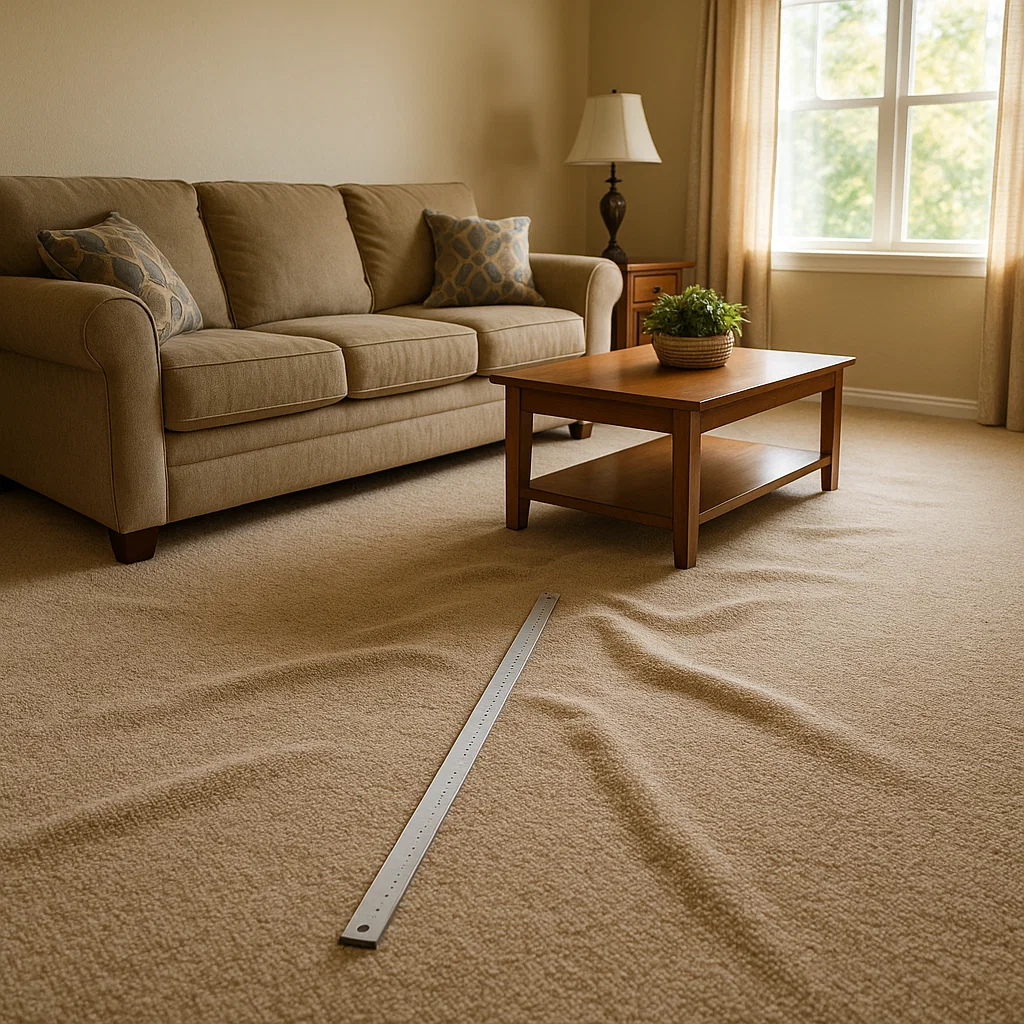
Ripples develop when carpet loses tension—power stretching returns it to a flat, safe surface.
Why ripples happen
Wall‑to‑wall carpet is installed under tension so the backing stays flat and locked onto the tack strip around the room. If that tension relaxes, the carpet develops ripples or “speed bumps” across traffic lanes. The common triggers are predictable: furniture drag that lifts the carpet off the tack strip, high humidity that swells the backing and lets it shift, a loose or aging pad that lets the carpet travel, and—very often—an installation that relied on a knee kicker instead of a full power stretcher.
How we fix it—proper stretching, not shortcuts
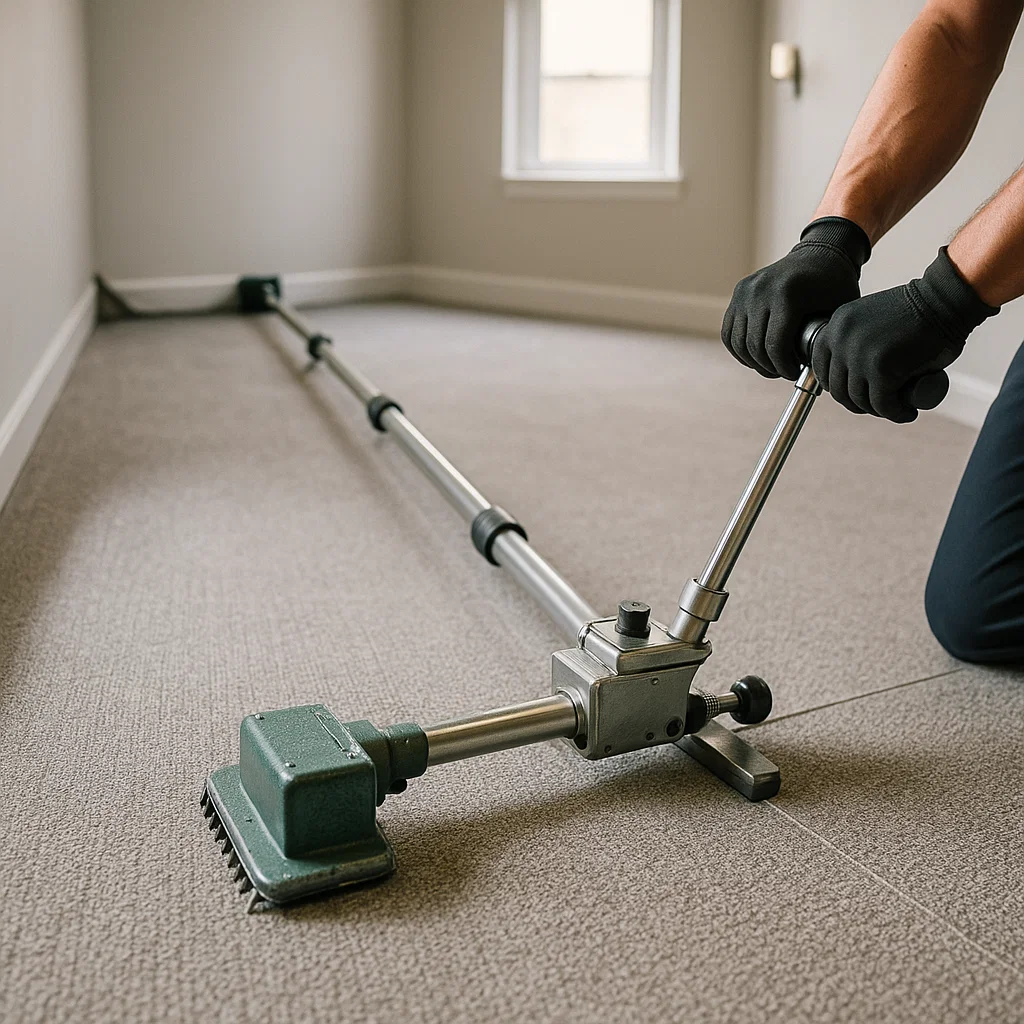
We restore the original tension using a power stretcher that spans the room. The tool’s poles and head distribute force evenly so the backing moves as a sheet rather than in small waves. We stretch along the longest dimension first, then across the short dimension as needed to remove cross ripples. Once the carpet is flat, we trim the small amount of excess along the edge and tuck it neatly onto the tack strip. Door thresholds are re‑seated, transitions checked, and seams inspected. The result is a room that looks new again and vacuums easier because the head glides smoothly.
A power stretcher spans the room to apply even, controlled tension.
What about wrinkles that keep coming back?
Recurring ripples point to one of three root causes:
Pad mismatch. A too‑thick or soft pad allows the carpet to walk and bunch. We’ll recommend correct density and thickness for your carpet type.
High humidity or leaks. Chronic moisture relaxes latex in the backing. We’ll look for slab moisture, pets’ favorite spots, or HVAC settings and suggest fixes.
Installation corners. Rooms stretched by knee kicker only or with undersized tack strips lose tension early. Re‑stretching with power equipment solves that.
Safety & aesthetics
Ripples are more than cosmetic. They catch bare feet, wrinkle under office chairs, and make vacuums chatter. Sunlight exaggerates them, especially across large windows. Power stretching returns the clean, even look you remember and pares visual noise in a space.
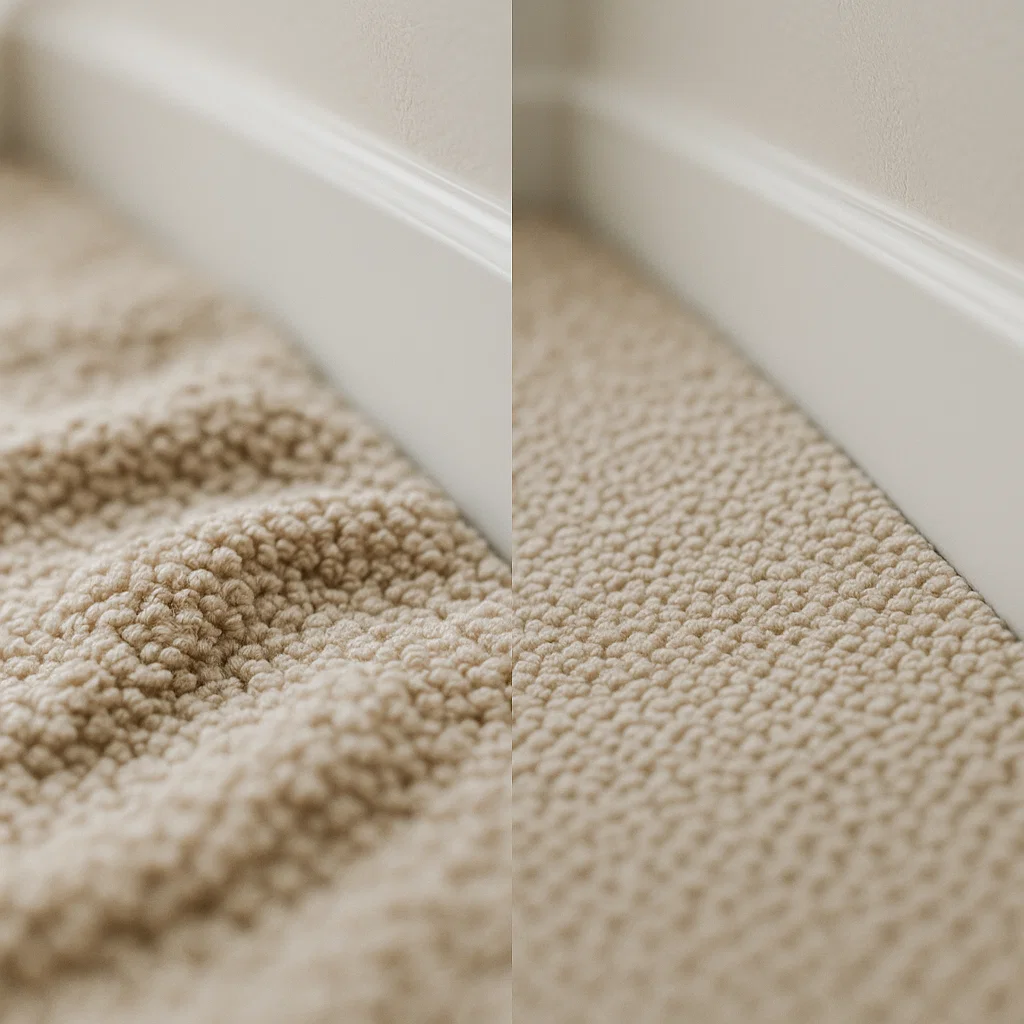
After stretching, excess carpet is trimmed and tucked securely onto the tack strip.
Our step‑by‑step approach
Inspection & plan. We identify the backing type, pad condition, seams, and transitions and estimate how much movement is needed.
Furniture glide. We group pieces to one side (or remove small items) so the stretcher can run the full span.
Power stretching. The head grips the pile and we take controlled pulls along the longest wall, then across the width to level cross ripples.
Trim & tuck. Excess is trimmed, tucked onto the tack strip, and edges are groomed.
Final detailing. Thresholds are re‑seated, seams checked, and pile brushed to remove stretch marks.
How to keep ripples from returning
Lift heavy furniture with sliders—never drag across the room.
Maintain indoor humidity in a steady 35–55% range.
Use an appropriate pad; ultra‑soft, thick pads can walk underfoot.
Ask movers to use boards or dollies instead of pulling by the carpet edge.
When stretching isn’t enough
If the primary/secondary backing is delaminating, seams are heat‑damaged, or the pile is worn to the backing in traffic lanes, stretching won’t hide the wear. In those cases we’ll offer spot repairs or discuss replacement. Our goal is to stretch when it makes sense and save you money—but also to be candid when new carpet will truly look better.
Power stretcher vs. knee kicker—what’s the difference?
A knee kicker is a small tool meant for positioning carpet into edges and on stairs. It concentrates force into a few inches of backing. A power stretcher spans the room with poles and spreads force across a head that grips the pile. That big, even pull is what removes waves without creating new ones. We still use a kicker—but only to position the last inches as we tuck onto the strip.
What you’ll hear and feel during stretching
Stretcher clicks are normal as tension increases. You may see the pile ruffle briefly where the head engaged; we groom that out at the end. Freshly stretched carpet can feel “tighter” underfoot for a day or two, then settles into a smooth, quiet sweep.
Cost factors
Room size and number of pulls required.
Furniture quantity and whether pieces can be glided or must be disassembled.
Edge repairs—replacing missing tack strip or securing loose thresholds.
Seam work needed once slack is removed.
What we bring to the job
Professional power stretcher with adjustable poles, head pads, and corner tools.
Sliders and protective boards to move furniture safely.
New tack strip, seam tape, and threshold fasteners for on‑the‑spot fixes.
Groomers and shears to finish the edge cleanly.
After‑care tips
Give the room its normal traffic right away; there is no dry time.
Vacuum slowly to stand fibers back up; any temporary ruffling from the stretcher will disappear.
Plan cleaning after stretching—not before—so the pile dries in its corrected position.
Common myths
“Cleaning will shrink the carpet and remove ripples.” Cleaning improves appearance, but it doesn’t set structural tension.
“A knee kicker is the professional tool.” It’s for corners and stairs; the power stretcher establishes tension in open rooms.
“Ripples mean my carpet is ruined.” In most homes, ripples are a reversible tension issue, not a material failure.
Small case studies
Open living room with patio door: Afternoon humidity caused seasonal waves. Power stretching plus a modest HVAC schedule change stopped the cycle.
Home office with chair traffic: The pad had softened under the desk. We stretched and replaced a square of pad to stop movement.
FAQ
Will I see the cut line after trimming?
No. The trimmed edge tucks onto the tack strip and is brushed to blend with adjacent pile. Once groomed, the edge disappears.
Do you move furniture?
We can shift most pieces using sliders. Heavy, delicate, or built‑ins may stay in place; we’ll outline a plan during inspection.
How long does a room take?
Many living rooms take 60–90 minutes depending on size, furniture, and how many pulls are needed.