
Carpet Stretching & Repair • Special Cases
Loop‑pile and patterned styles are beautiful—and particular. Our method keeps loops secure and patterns straight while restoring proper tension.
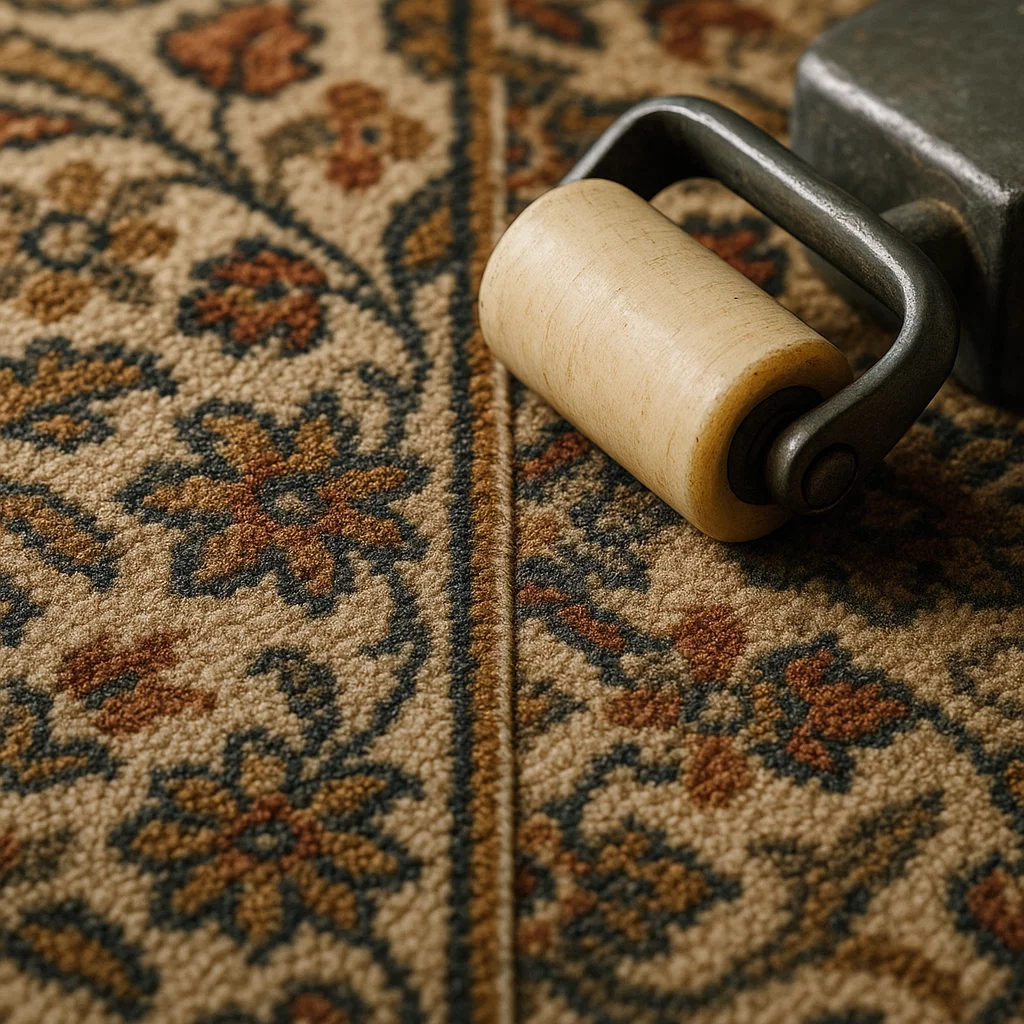
Berber is a loop‑pile construction: individual loops are anchored in the backing rather than cut. That loop makes Berber durable and stylish—but it also means a snag can travel. When we stretch Berber, we use longer increments with slightly lower head bite so loops aren’t pinched. The power stretcher does the heavy lifting; a knee kicker is reserved for positioning in corners and on stairs.
Patterned or sculpted carpet has a visual repeat that must line up. If a room was installed without careful matching, patterns can skew as the carpet relaxes, making a wall look “crooked.” During stretching we align to a reference wall, set faint chalk marks at the perimeter, and take smaller pulls so the motif stays true. Seams are opened and re‑bonded only if necessary to preserve the pattern.
In a Berber room, you’ll feel a smoother glide underfoot and see tight, even rows with no “smiles” across seams. In a patterned room, the motif will run straight along baseboards and doorways, lines meeting neatly at thresholds. These details are subtle, but they make a space feel crafted rather than chaotic.
Patterns can drift in long runs or across doorways if the original layout didn’t respect the repeat. We establish a control line, then stretch each leg of an L‑shaped room to that reference. In hallways we align to the longest sight line so the pattern reads straight where your eye travels most.
Berber on stairs requires careful bite and more, smaller pulls to prevent telegraphing. We tighten treads and risers methodically and secure at the stringers so edges stay crisp. Landings with pattern repeats are aligned to the sight line at the top step for the cleanest look.
If the original installation introduced a slight pattern skew, stretching can minimize the visual effect but may not eliminate it entirely across very long runs. We’ll show you alignment choices and prioritize what your eye reads first when you enter the room.
Often yes. We tighten the runner with careful, low‑bite pulls and re‑tack at the steps. If loops are damaged, we secure or patch small sections.
No. We use alignment marks and incremental pulls so the pattern stays square. If a seam must be adjusted, we realign it to the repeat.
For patterned repairs, a closet donor is best. If that’s not possible, we’ll propose a discrete threshold patch or a design‑aware alternative.
Patterns and loop textures guide how a room feels. We prioritize straight lines along the wall you notice first—the one opposite the entry or the one framing windows. By aligning to that sight line and balancing pulls from there, the room reads intentional even in older installations with minor manufacturing bow or historic skew.
If we re‑bond a seam while aligning a pattern, we allow it to cool under weight before grooming. You can walk the room right away, but avoid dragging furniture straight across the new seam for the rest of the day. This light care helps the bond cure flat.