Health Benefits of Professional Air Duct Cleaning (and Why the RotoBrush System Matters)
If your home feels dusty, allergy season hits hard, or airflow seems “off,” your ductwork may be part of the story.
Here’s what professional duct cleaning can—and can’t—do for a healthier-feeling home.
Allergies & irritantsDust control after renovationsOdors pets & musty airHVAC comfort airflow support
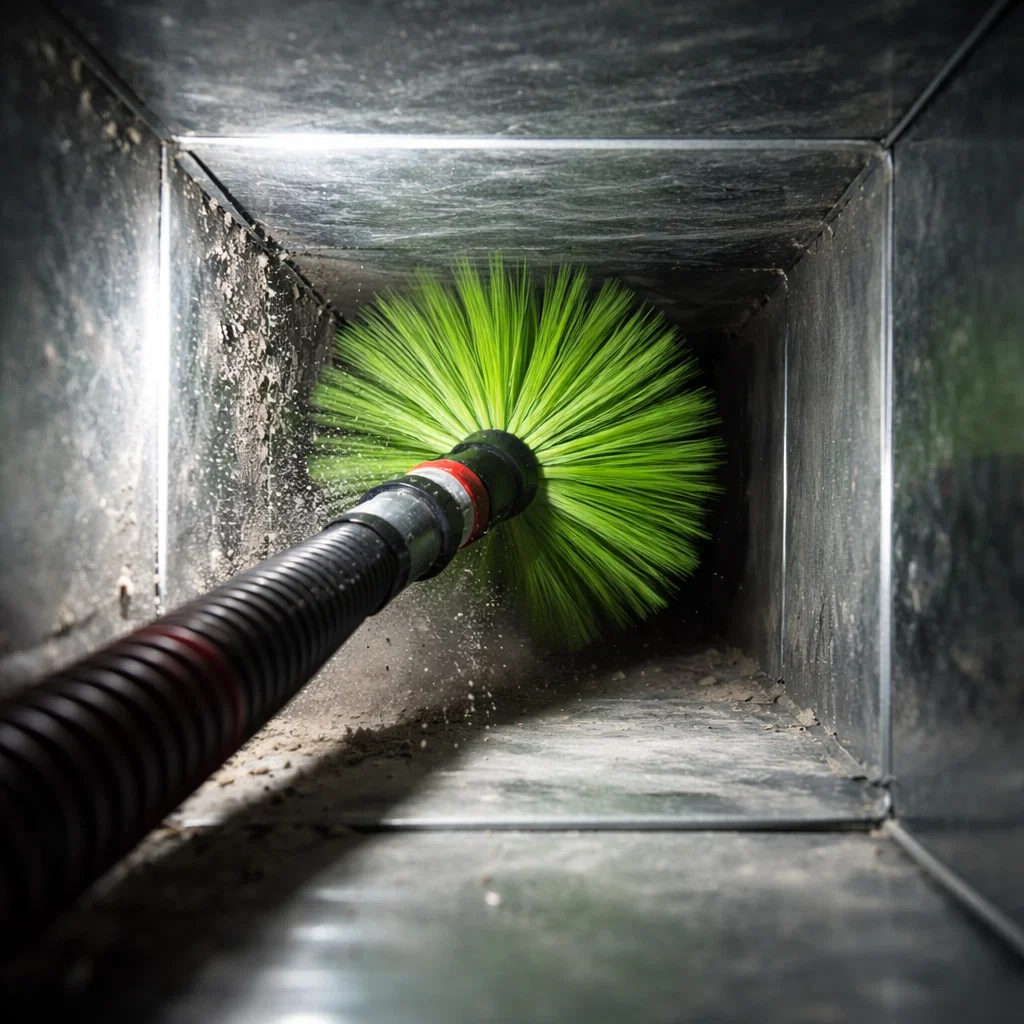
Angelo’s Cleaning uses the RotoBrush system to agitate buildup off duct surfaces and capture it—so you get a deeper clean, not a “vent-only” wipe-down.
The air in your home cycles through the ducts—so what’s inside matters
Every time your HVAC runs, it pulls air through return vents, moves it through the system, and pushes it back out through supply vents.
Over time, ductwork can collect dust, lint, pet dander, pollen, and renovation debris. When airflow disturbs that buildup, it can contribute to
dust settling around the home and stale “system smell” when the heat or AC kicks on.
Realistic expectation: Duct cleaning is not a medical treatment and it’s not a guaranteed cure for allergies.
But when duct contamination is present, removing it can reduce what your HVAC may redistribute and help the home feel cleaner.
What commonly collects in air ducts
Household dust & lint: especially in returns and near registers.
Pet dander: can build up and get disturbed during HVAC cycles.
Pollen: enters through doors/windows and can settle into the system.
Renovation debris: drywall dust is extremely fine and persistent.
Odor particles: cooking oils, smoke residue, and musty smells can cling to dust in the system.
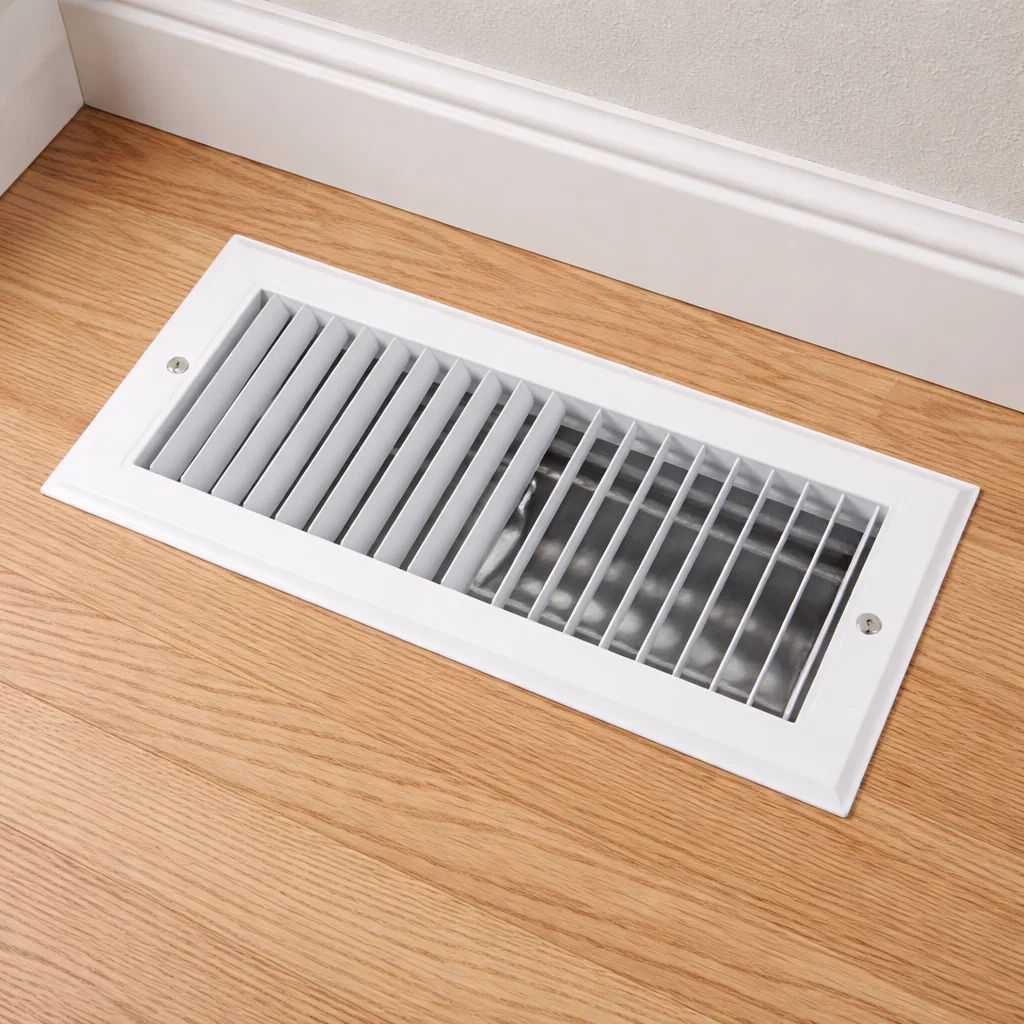
Clean covers + clean edges help reduce dust fall-out around registers.
Health benefits of professional air duct cleaning (the practical version)
When ducts are visibly dirty, contaminated from construction, or tied to persistent dust and odors, professional cleaning can support a healthier-feeling home.
Here’s where homeowners most often notice a difference:
Fewer airborne irritants: Less buildup in the system means less material available to be disturbed when HVAC runs.
Allergy-season support: Cleaner duct surfaces can help reduce irritants being redistributed—especially when paired with good filtration.
Less “mystery dust” around vents: Many clients notice less dust accumulating near registers and returns.
Fresher system smell: Removing dusty buildup can reduce stale odors that appear when the system turns on.
More consistent comfort: Clearing heavy debris can support more even airflow from room to room.
Heads up: If you suspect active moisture in HVAC components, the priority is fixing the moisture source.
Cleaning removes contamination, but moisture problems must be corrected or they can return.
Why the RotoBrush system matters for a true deep clean
There’s a big difference between “cleaning near the vent” and properly cleaning the system.
Angelo’s Cleaning uses a RotoBrush contact-cleaning system so we can loosen stuck debris from duct walls and remove it as we go.
That contact brushing is what makes the cleaning deeper than suction alone.
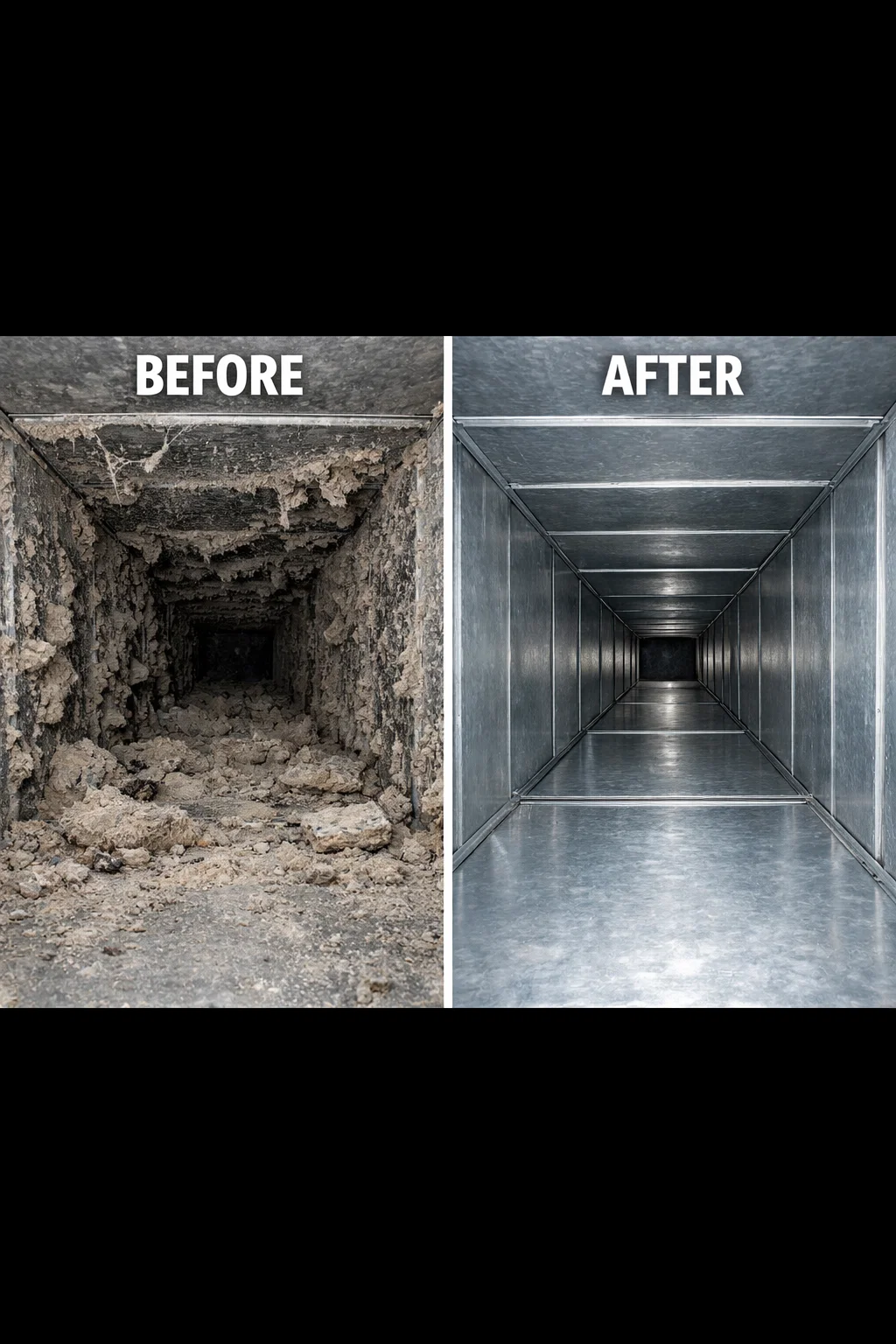
Deep-clean difference: The RotoBrush system helps deliver a deep clean every time by brushing buildup off duct surfaces—so it can be captured and removed, not left behind.
Why contact brushing + extraction works
Breaks loose stuck debris: Dust often clings to duct walls; brushing dislodges it.
Targets the full run: The “problem zones” are often deeper than the first few feet.
Cleaner results you can feel: Homes often feel less dusty and fresher after a thorough, system-wide clean.
Cleaner ducts + good filters + steady HVAC upkeep is the best long-term plan for better-feeling indoor air.
Signs you may need air duct cleaning
Post-renovation dust: drywall sanding, flooring work, or major remodeling.
Dust puffing from vents: visible particles when the system starts.
Stale or musty HVAC odor: especially right when heat/AC turns on.
Heavy pet shedding: dander and hair can build up in returns.
Persistent dust near registers: “dust halos” around vent covers.
After pest activity: evidence of nesting or debris tied to ductwork areas.
What to expect during a professional duct cleaning
System review. We map supply/returns and identify access points.
Home protection. We protect nearby surfaces and keep the work area tidy.
RotoBrush deep cleaning. We brush and remove buildup from branch lines and trunks.
Finish details. Covers are cleaned and reinstalled; you can review results.
How often should you clean your air ducts?
Not every home needs duct cleaning on a strict schedule. A practical approach is to clean when there’s a clear reason:
renovations, visible dust from vents, persistent odors tied to HVAC cycles, or heavy dust load from pets and lifestyle.
FAQ
Does air duct cleaning help with allergies?
It can help reduce irritants when ducts are dirty or contaminated (especially after renovations or with shedding pets). The best results come from combining duct cleaning with good filters and regular HVAC upkeep.
What makes Angelo’s cleaning method different?
We use the RotoBrush system for contact cleaning—brushing duct surfaces to loosen buildup so it can be removed—rather than focusing only on what’s visible at the vents.
Will duct cleaning eliminate all dust in my home?
No home is “dust-free,” but cleaning can reduce one source of redistributed dust when duct contamination is present. We’ll also recommend practical steps like filtration and return-vent habits to keep things cleaner longer.
How long does air duct cleaning take?
Timing depends on vent count, number of HVAC systems, layout, and buildup level. A proper cleaning prioritizes thoroughness over speed—expect a clear plan before we start.
Quick recap
Healthier-feeling air starts with reducing irritants at the source—duct cleaning can help when buildup is present.
RotoBrush matters because contact brushing helps dislodge stuck debris for a deeper clean.
Best timing is after renovations, when dust blows from vents, or when odors and dust patterns match HVAC cycles.