Dryer Vent Cleaning • Safety Guide
Slow dry times aren’t just annoying—they’re often a restricted airflow problem. A clogged dryer vent makes your dryer run hotter, longer, and harder. Here’s how to spot the warning signs early, what “real cleaning” includes, and why annual dryer vent cleaning is one of the simplest ways to reduce risk.
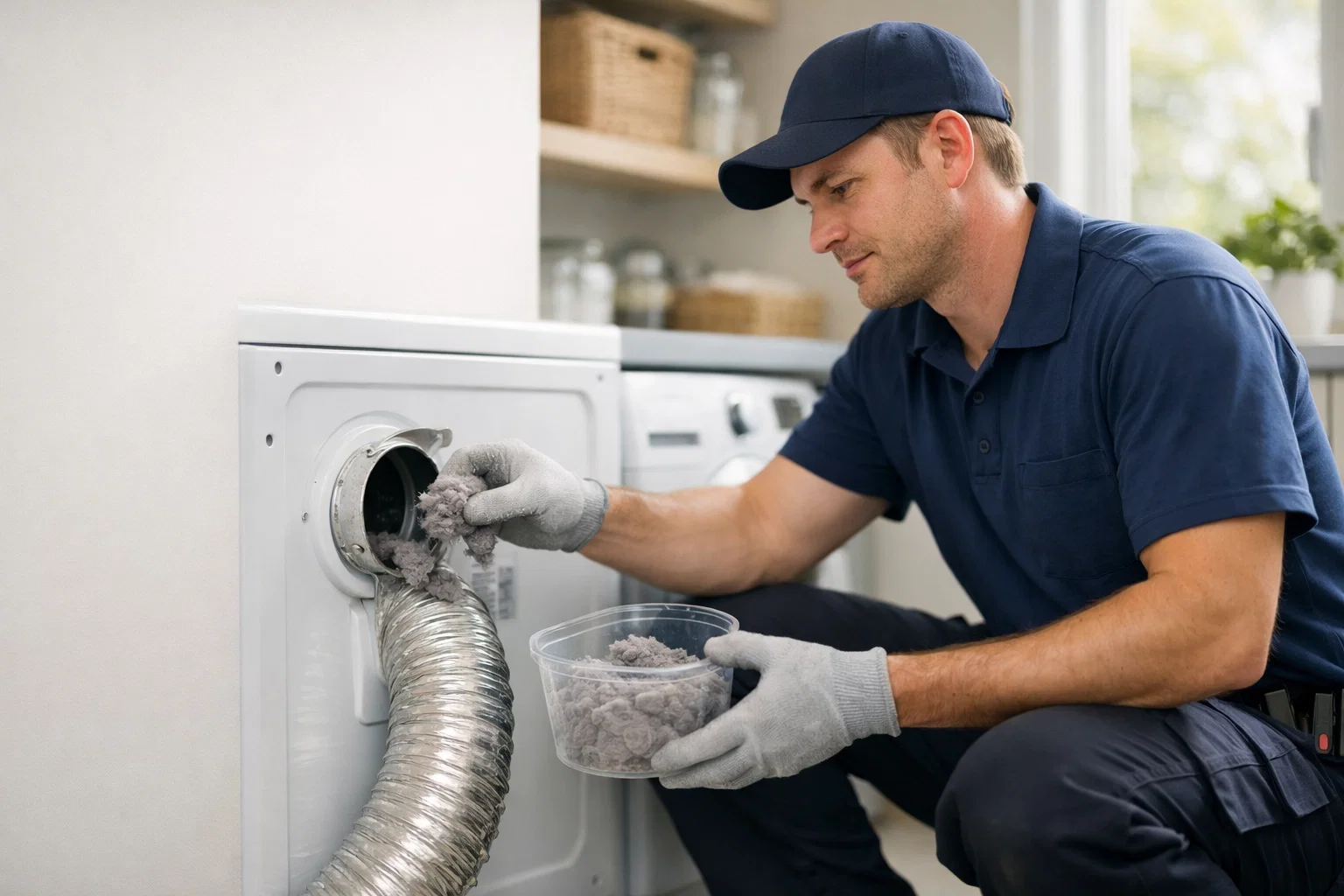
Quick safety note: If you ever notice a strong burning smell during a cycle, stop the dryer, let it cool, and don’t run it again until the vent path is checked. Heat + lint buildup is a bad combo.
The most common “symptom” of a clogged dryer vent is simple: the dryer can’t move air the way it was designed to. When airflow drops, moisture stays in the drum longer, heat builds up, and the machine compensates by running longer.

Simple clue: If your dryer “used to” dry a mixed load in one cycle and now doesn’t—your vent path is the first place to look.
Dryer vents clog for the same reason vacuum filters clog: tiny fibers accumulate over time. As lint builds up in elbows, long runs, flex connections, and the exterior hood, it narrows the airway. The dryer still tries to push warm, moist air out— but it has to work harder, and heat levels can climb.
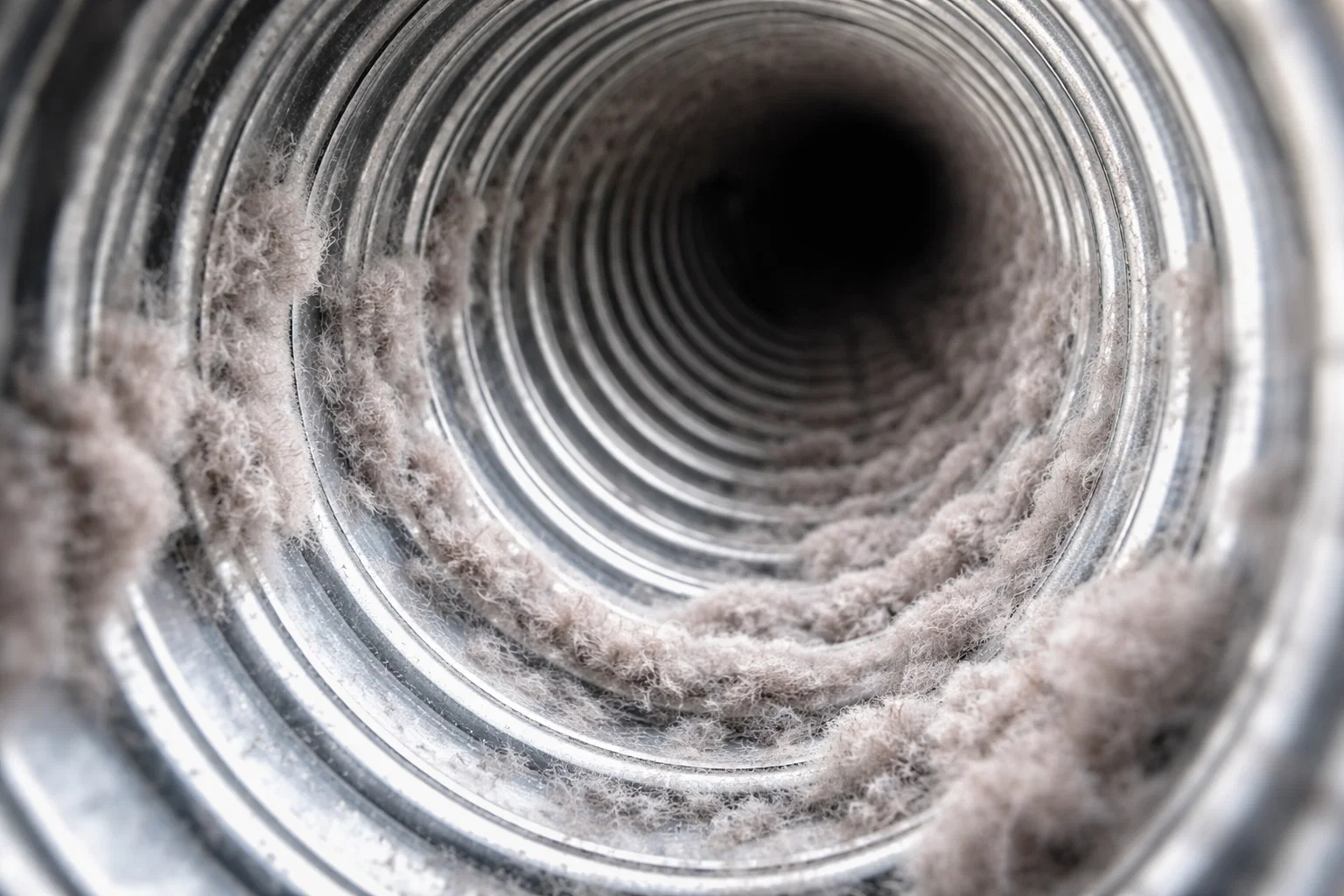
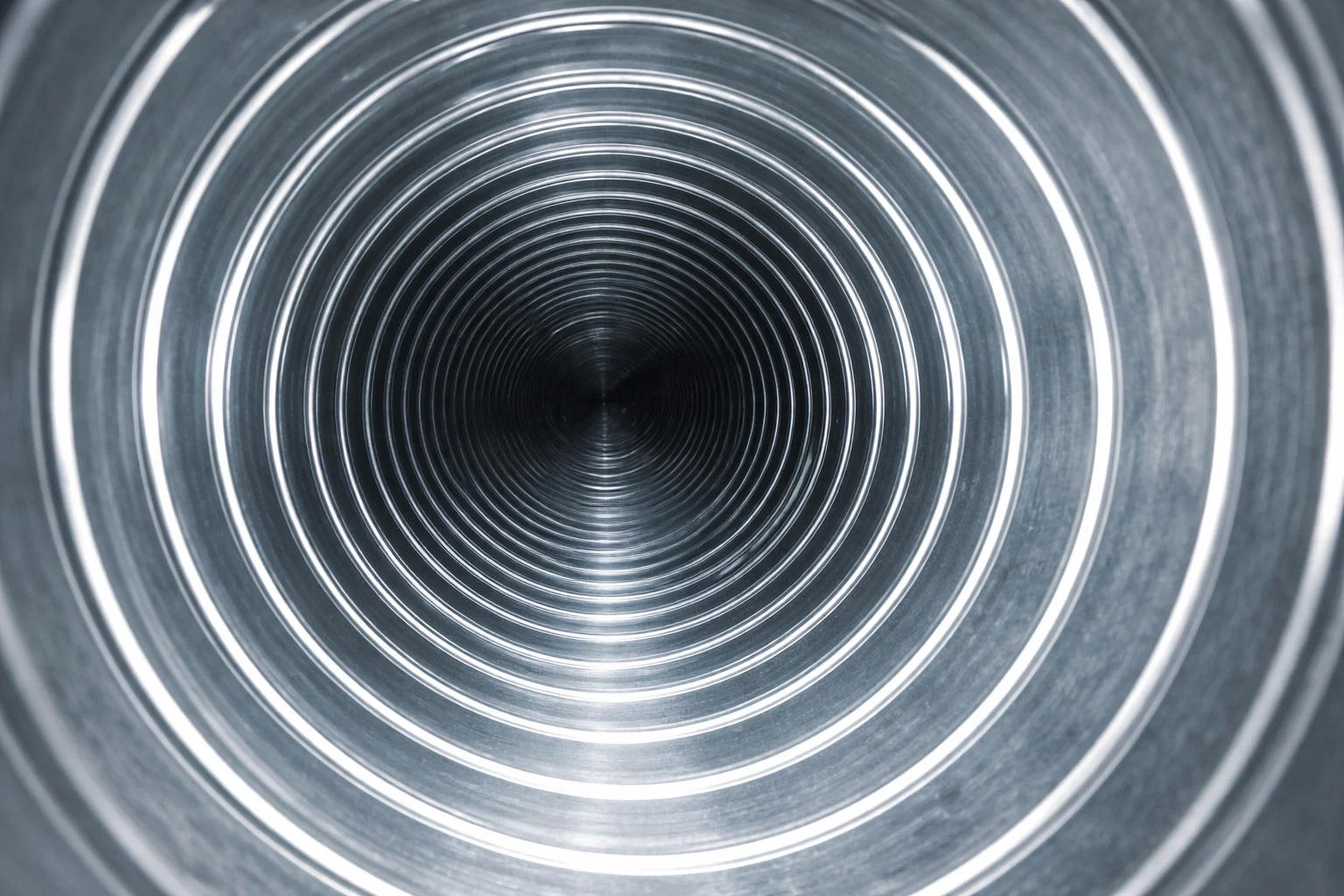
Dryer lint is highly combustible. When airflow is restricted, temperatures can rise and lint can accumulate in places you can’t see. Annual service is a proactive way to remove buildup before it becomes a hazard—and before it quietly drives up dry times.
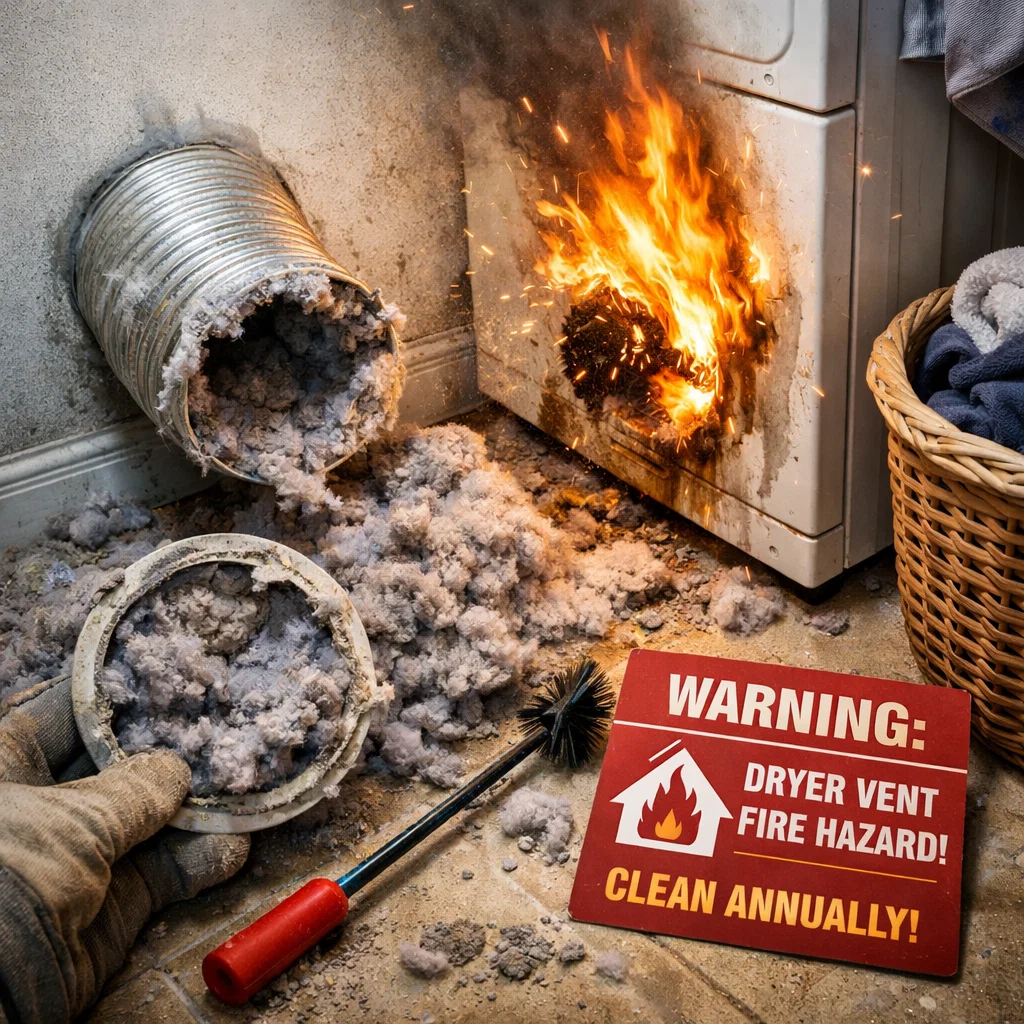
Annual isn’t always enough: Big households, lots of towels/bedding, long duct runs, or roof terminations may need cleaning more often. (We’ll tell you based on what we see.)
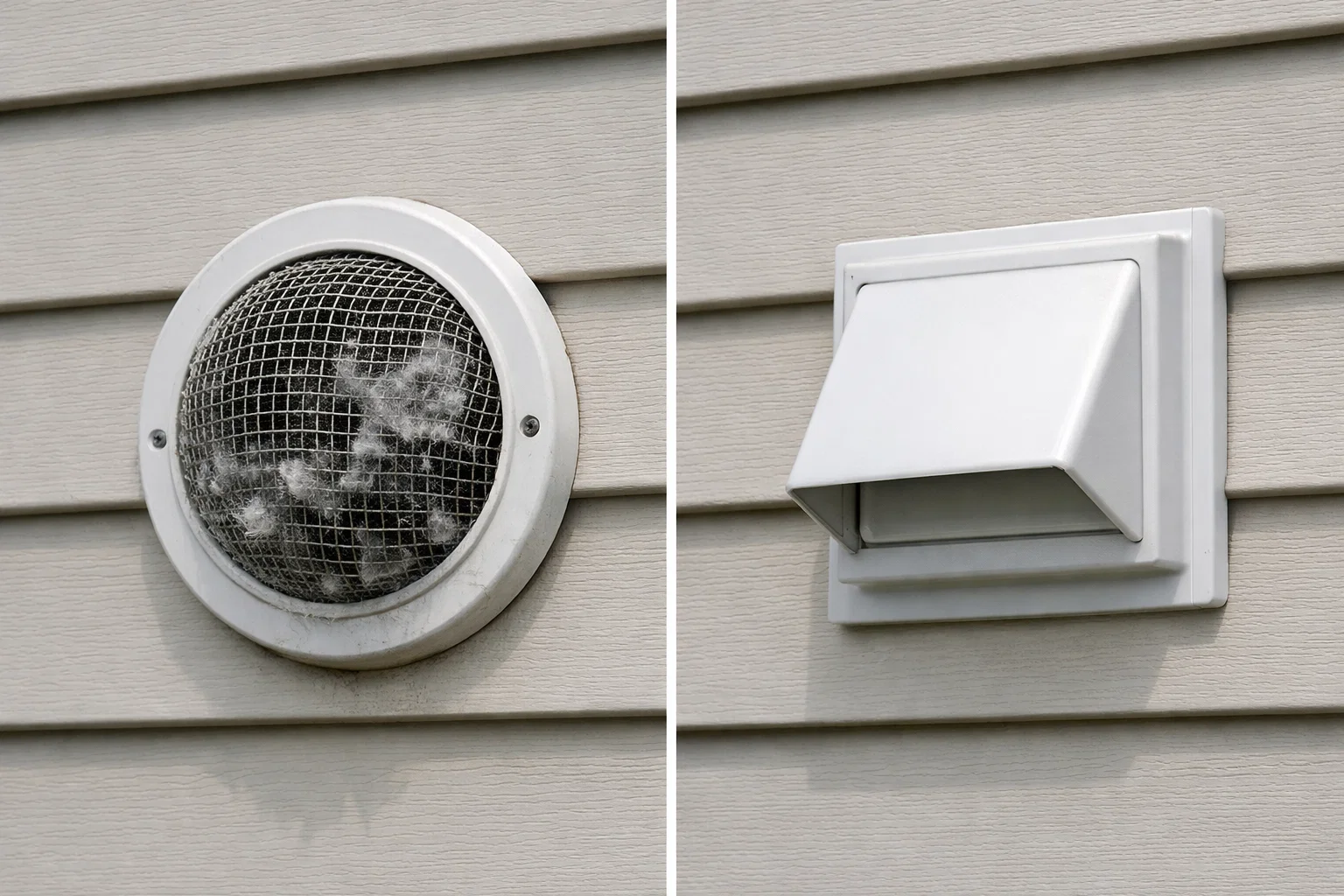
Many airflow issues start at the end of the line. Some vent covers use screens or mesh that catch lint and clog fast. A proper dryer termination should allow the flap/damper to open fully during a cycle—without a lint-trapping screen in the airstream.
Related read: Want smarter airflow upgrades? See our guide on terminations, rigid ducts, and boosters: Dryer vent upgrades that cut lint buildup .
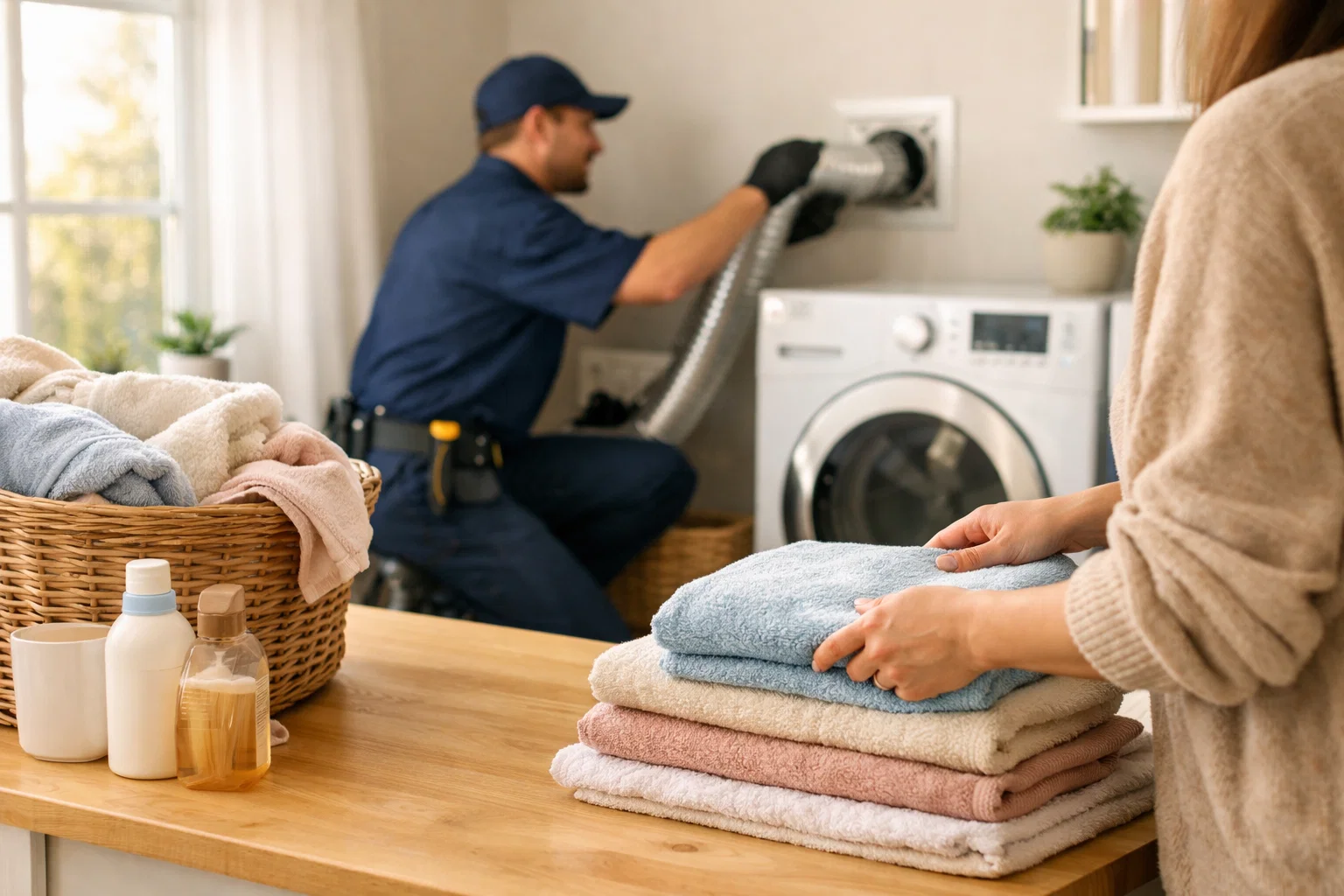
A thorough service isn’t just vacuuming at the vent opening. Professional dryer vent cleaning is about clearing the full vent path end-to-end, including branch sections, elbows, and the exterior termination—so airflow is restored where clogs actually form.
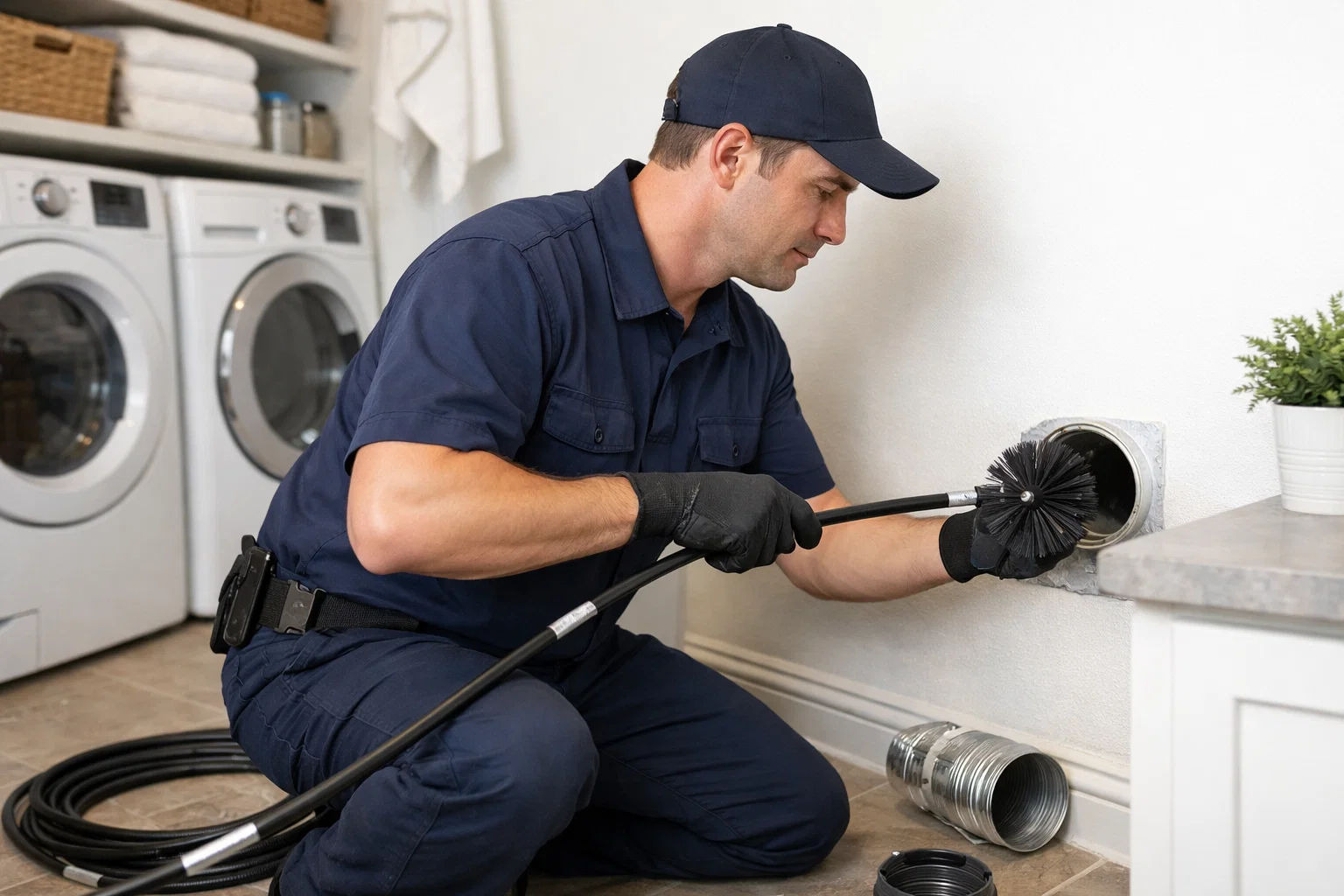
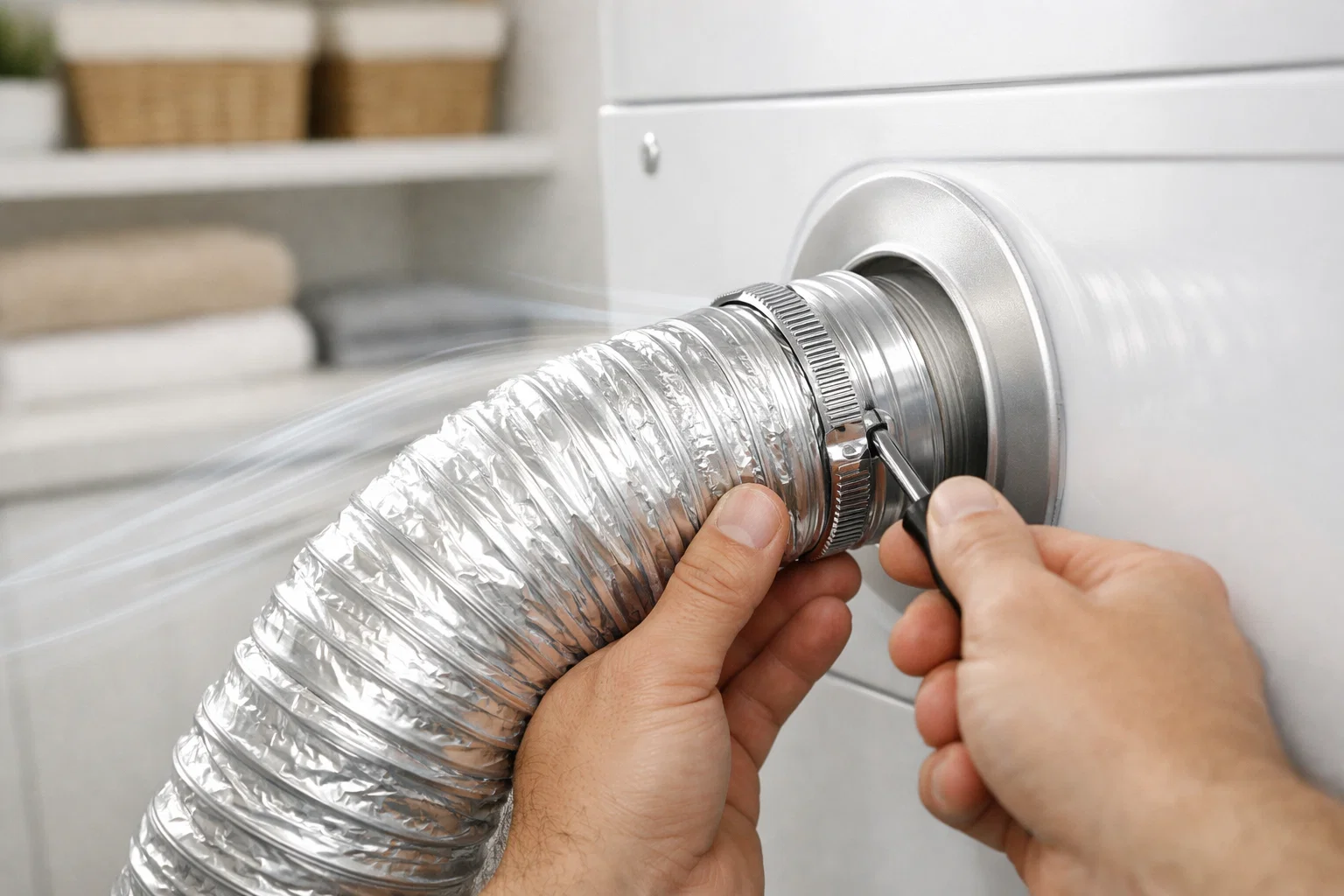
As a baseline, many homes benefit from annual dryer vent cleaning. That said, “how often” is really about lint load and vent design. Long runs, multiple elbows, roof terminations, and heavy laundry volume increase how quickly lint builds up.

Condo & townhome note: Dryer vent responsibility can vary by building setup. If you share a vent path or have a complex route, this guide helps: Condo & townhome dryer vent rules and responsibilities .
There are a few helpful, safe DIY habits—especially weekly/monthly. But once you’re dealing with long runs, roof vents, or recurring slow dry times, professional tools and end-to-end cleaning are usually the smarter (and safer) move.
Want the deep comparison? Read: DIY vs professional dryer vent cleaning—what homeowners should know .
If you’re seeing the signs above, don’t wait until the dryer overheats or you’re stuck running two or three cycles. A professional cleaning restores airflow and helps you dry safely and efficiently.
Longer dry times—especially for towels and jeans. If you suddenly need extra cycles, airflow restriction is a top suspect.
Many homes benefit from annual dryer vent cleaning. You may need more frequent service with heavy laundry volume, long runs, roof vents, or recurring slow dry times.
Some warmth is normal, but a room that becomes noticeably hot or humid can signal restricted exhaust. That’s often a “check airflow” moment.
You can do basic upkeep (lint screen every load, checking the exterior flap). For long/hidden runs, roof vents, or repeat clogs, professional tools and end-to-end cleaning are usually safer and more effective.
Yes—checking the termination and confirming strong discharge is a key part of making sure the cleaning actually restored airflow.