Google Reviews

Upholstery Cleaning • Furniture Care Guide

Upholstery Cleaning 101: Prolonging the Life of Your Furniture

Upholstered furniture is one of the biggest “everyday-use” investments in a home—yet it’s also one of the easiest to accidentally damage with the wrong spot cleaner, too much water, or aggressive scrubbing. Whether you’re in King of Prussia, Blue Bell, or Royersford, this guide will help you understand fabric types, avoid the myths that shorten furniture life, and see why professional hot-water extraction (when appropriate for the fabric) can keep pieces looking newer for longer.
Fabric types know what you own Spot myths avoid damage Hot-water extraction deep rinse Local service KOP • Blue Bell • Royersford
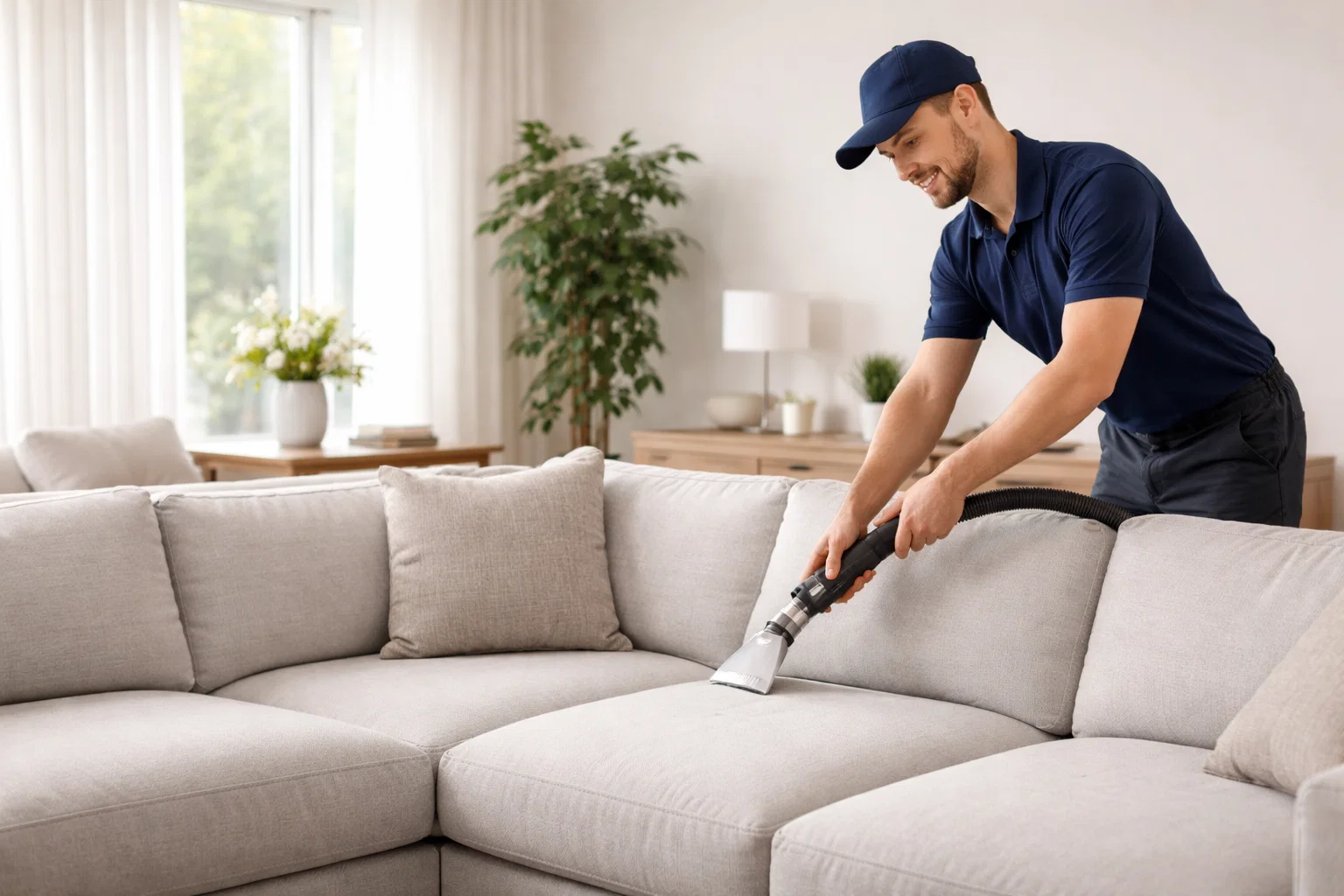
Professional upholstery cleaning technician cleaning a sectional sofa with an extraction tool
Upholstery should be cleaned with fabric-appropriate methods—controlled moisture, proper rinsing, and the right tools for the job.

Fast takeaway: Upholstery isn’t just “fabric over foam.” It’s a system—fiber, dye, backing, and cushion fill. The best way to protect it is to identify the fabric, avoid over-wetting, and remove residues (not just the visible spot). If you want service details, see: Upholstery Cleaning Services .

Jump to what you need


Why upholstery gets dingy (even when you “don’t spill”)

Most furniture doesn’t look tired because of one big accident—it fades slowly from oils, dry soil, and daily contact. Armrests darken first. Headrests and seat fronts collect body oils. Cushions trap crumbs, pet hair, dust, and everyday grit that acts like sandpaper on fibers over time.

In high-use living rooms—like family spaces throughout King of Prussia where the sectional gets movie-night traffic—those oils and fine particles build up gradually. Then one day, the whole couch just looks “gray” or “flat,” even if you’ve been careful.
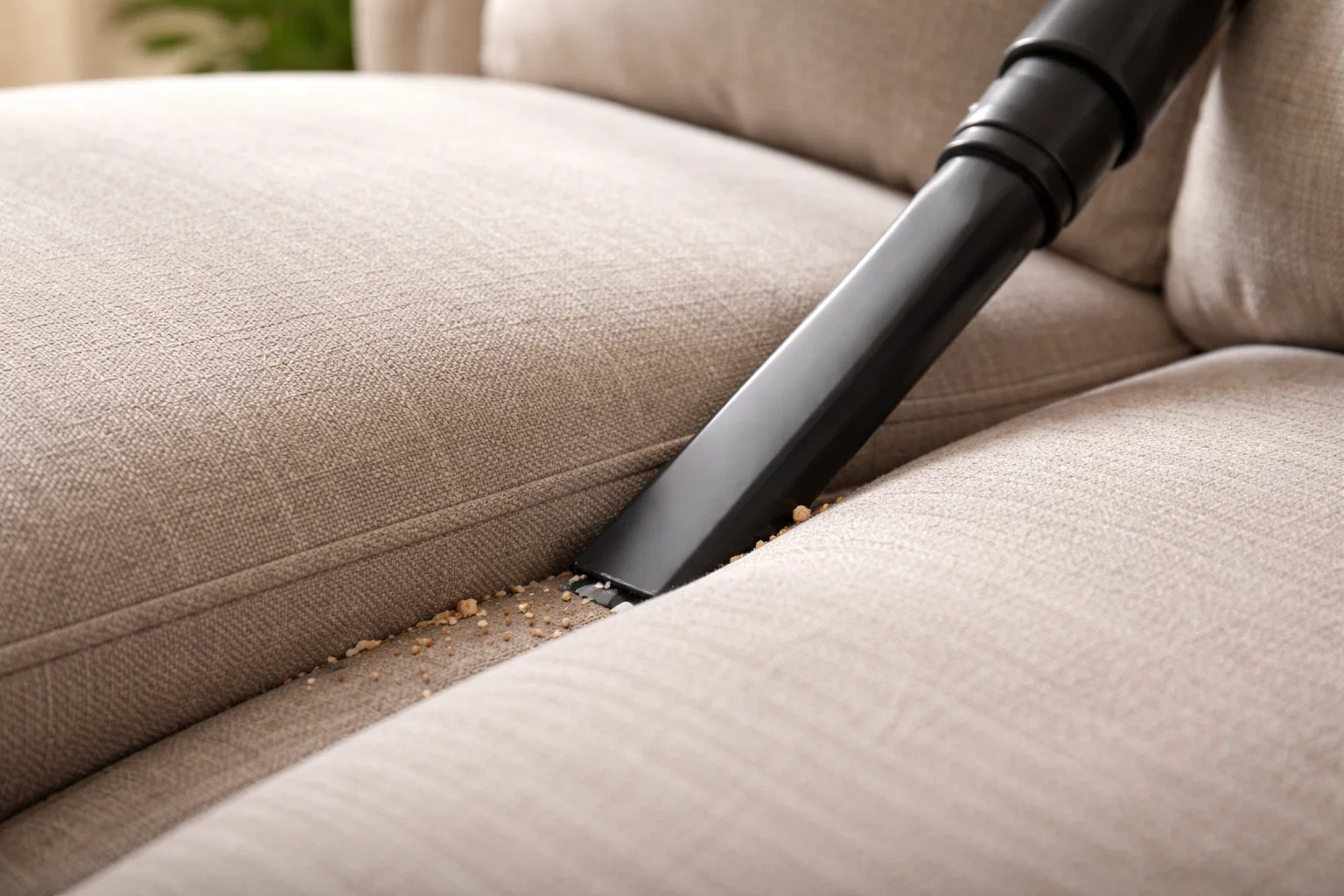
Vacuuming between sofa cushions with a crevice tool to remove dust and crumbs
Weekly vacuuming (especially in seams and cushion edges) helps reduce abrasive grit that wears fibers down over time.

What “wear” looks like on upholstery

  • Dark arms/headrests: oil + soil accumulation (often cleanable).
  • Flat seat fronts: texture changes from friction and compression.
  • Gray cast overall: fine soil + residue from DIY products.
  • Recurring spots: residue left behind or stain migrating back from deeper layers.

Fabric types & cleaning codes (W / S / WS / X)

Before you scrub anything, take 30 seconds to identify your upholstery. Many pieces have a manufacturer tag with a cleaning code—usually under a cushion or on the bottom of the frame. If you’re not sure, that’s a good moment to pause and ask a professional.
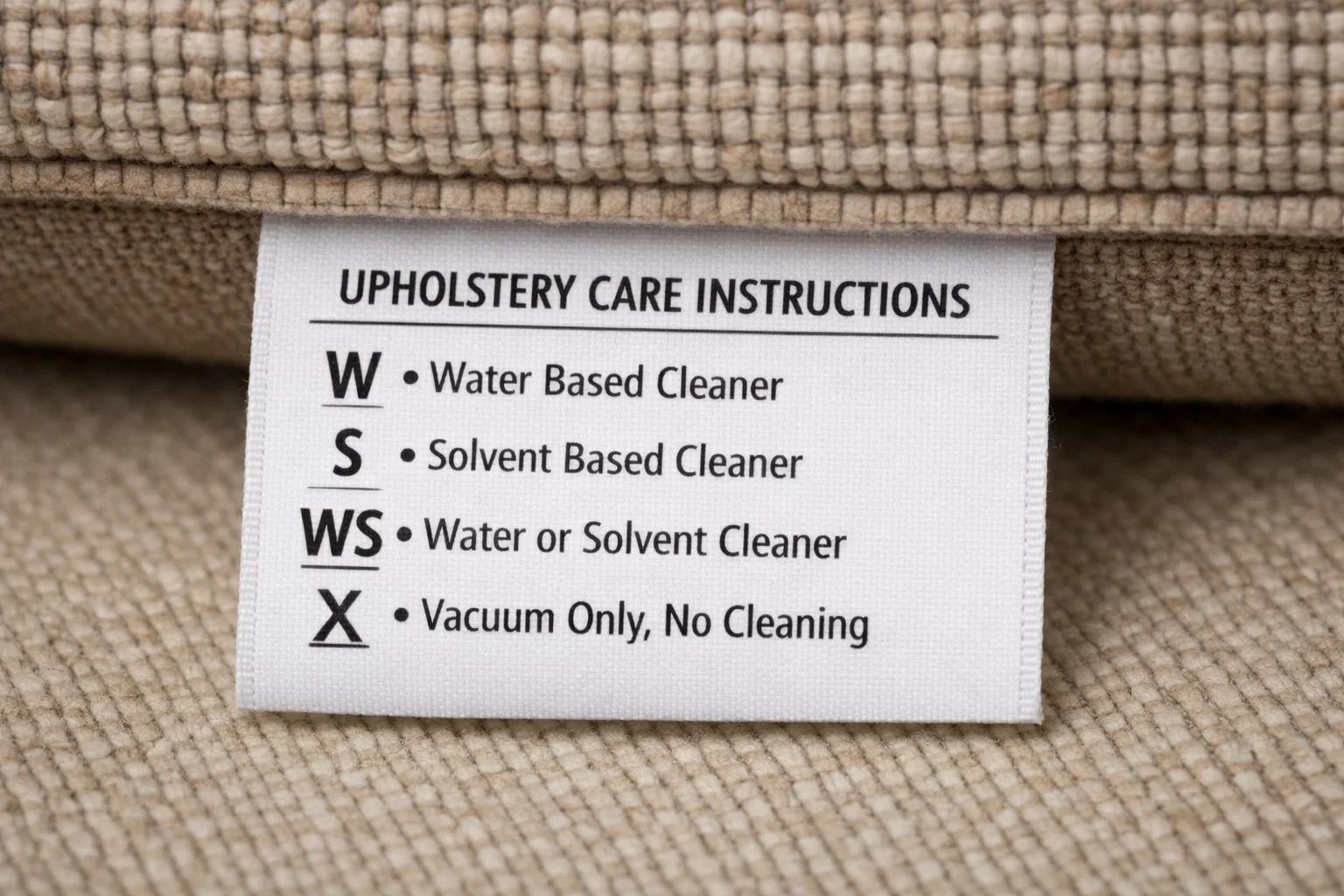
Upholstery cleaning code tag showing W S WS X fabric care symbols under a cushion
Cleaning codes are a helpful starting point—but “safe” still depends on dyes, texture, and how the piece is constructed.

Code W / WS

  • W: water-based cleaning methods may be acceptable
  • WS: water-based or solvent methods may be acceptable
  • Still important: spot test first—dyes and textures vary

Code S / X

  • S: solvent-based methods only (avoid water)
  • X: vacuum only—no liquids recommended
  • Big risk: water can cause rings, dye bleed, or texture change

Common upholstery fabrics (and how they behave)

  • Microfiber / polyester blends: durable, but oils can “shadow” and DIY soaps can leave sticky residue.
  • Cotton & linen blends: comfortable and breathable, but may spot easily and can show water marks if over-wet.
  • Velvet / specialty weaves: texture can shift—method selection and gentle finishing matter.
  • Leather: needs leather-safe cleaning and conditioning (not the same process as fabric).
  • Performance fabrics: often more forgiving, but still benefit from correct chemistry and thorough rinsing.

Important: If your furniture is leather, suede, velvet, or another specialty fabric, mention it when scheduling so the correct method and tools can be planned for your piece.

At-home maintenance that actually helps

The goal of at-home care isn’t to “deep clean” upholstery—it’s to slow down buildup so professional cleaning is easier, safer, and more effective. These habits make a real difference in homes across Blue Bell and Royersford where couches often do double-duty for kids, pets, guests, and everyday living.

Weekly (5–10 minutes)

  • Vacuum upholstery with a soft brush attachment (seams, cushion edges, and under cushions).
  • Rotate cushions if your piece allows it—wear becomes more even.
  • Lightly brush textured fabrics to keep the nap looking uniform.

Monthly (quick refresh)

  • Detail the arms and headrest—these collect oils faster than you think.
  • Clean the “cushion canyon”—crumbs and grit accelerate fiber wear.
  • Check for small spots early—fresh spills are easier than “mystery stains.”

Seasonal (prevention mode)

  • Vacuum along baseboards behind furniture to reduce dust buildup that settles on fabrics.
  • Manage direct sunlight (UV can fade some fabrics over time).
  • Consider fabric protection if your home sees frequent spills or pet traffic.

Spot-cleaning myths that ruin furniture

Many DIY methods “work” because they change the appearance temporarily—then leave behind residue, spread the stain, or damage the fabric texture. Here are the most common myths we see (and what to do instead).

Myth #1: “Dish soap is gentle, so it’s safe for upholstery”

Dish soap can be difficult to rinse fully from upholstery. Left behind, it becomes a soil magnet—the spot looks clean for a week, then reappears darker as it attracts oils and dust. If you use any cleaner at home, use very little, and always follow with a light rinse/blot.

Myth #2: “More water = better cleaning”

Over-wetting can push contamination deeper, slow drying, and create water rings—especially on natural fibers. Upholstery cleaning is about controlled moisture + effective extraction/rinsing.

Myth #3: “Scrub it hard to lift it out”

Aggressive scrubbing can fray fibers, distort texture, and spread staining. Blotting is safer than scrubbing in most cases.

Myth #4: “Vinegar or baking soda fixes everything”

DIY products can create residue or change fabric feel. More importantly, they often don’t remove the full spill load—especially oils—so the problem returns.

Rule of thumb: If a stain is bigger than your palm, has odor, or keeps returning after you “clean it,” it’s usually time for professional help—especially on light-colored furniture.
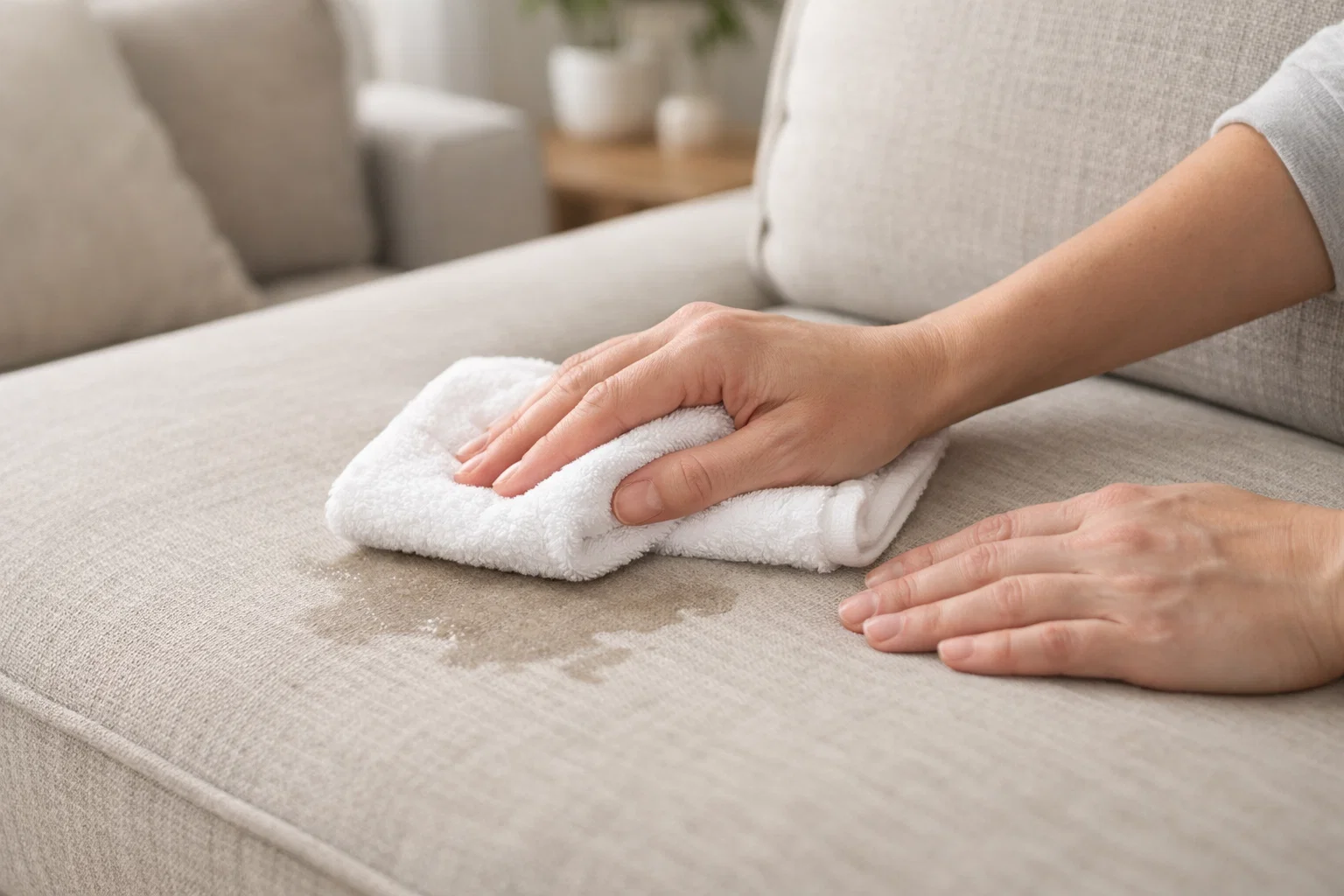
Blotting a fresh spill on a fabric couch with a clean white towel to prevent spreading
Blotting removes liquid without shredding fibers. Scrubbing often makes stains bigger and texture worse.

What to do right after a spill (safe steps)

Fast action helps—but the right action helps more. Here’s a simple process that’s safe for many fabrics (and helps you avoid turning a small issue into a permanent mark).

  1. Blot immediately. Use a clean white towel. Press, lift, repeat. Don’t rub.
  2. Remove solids carefully. Use a spoon edge or dull tool—avoid grinding it in.
  3. Use minimal moisture. Lightly dampen a cloth (not the couch) and blot from the outside in.
  4. Rinse lightly. If you used any cleaner, follow with a clean damp cloth to reduce residue.
  5. Speed dry with airflow. Fans and ventilation reduce water rings and odor risk.

Stop and call a pro if you notice dye transfer on your towel, the spot spreads, the fabric feels rough afterward, or the furniture has a Code S or X tag.

Professional upholstery cleaning & hot-water extraction explained

“Hot-water extraction” (often called steam cleaning) is a professional method that applies controlled heat and cleaning solution, then extracts it back out with suspended soil. The key is not just washing—it’s the rinse and removal. When used on the right fabric, it can lift deep body oils, embedded soil, and spill residue that vacuuming can’t reach.

A quality upholstery cleaning appointment typically includes fabric identification, pre-testing, targeted pre-treatment, deep cleaning with controlled moisture, and careful finishing so the piece dries evenly and looks uniform.
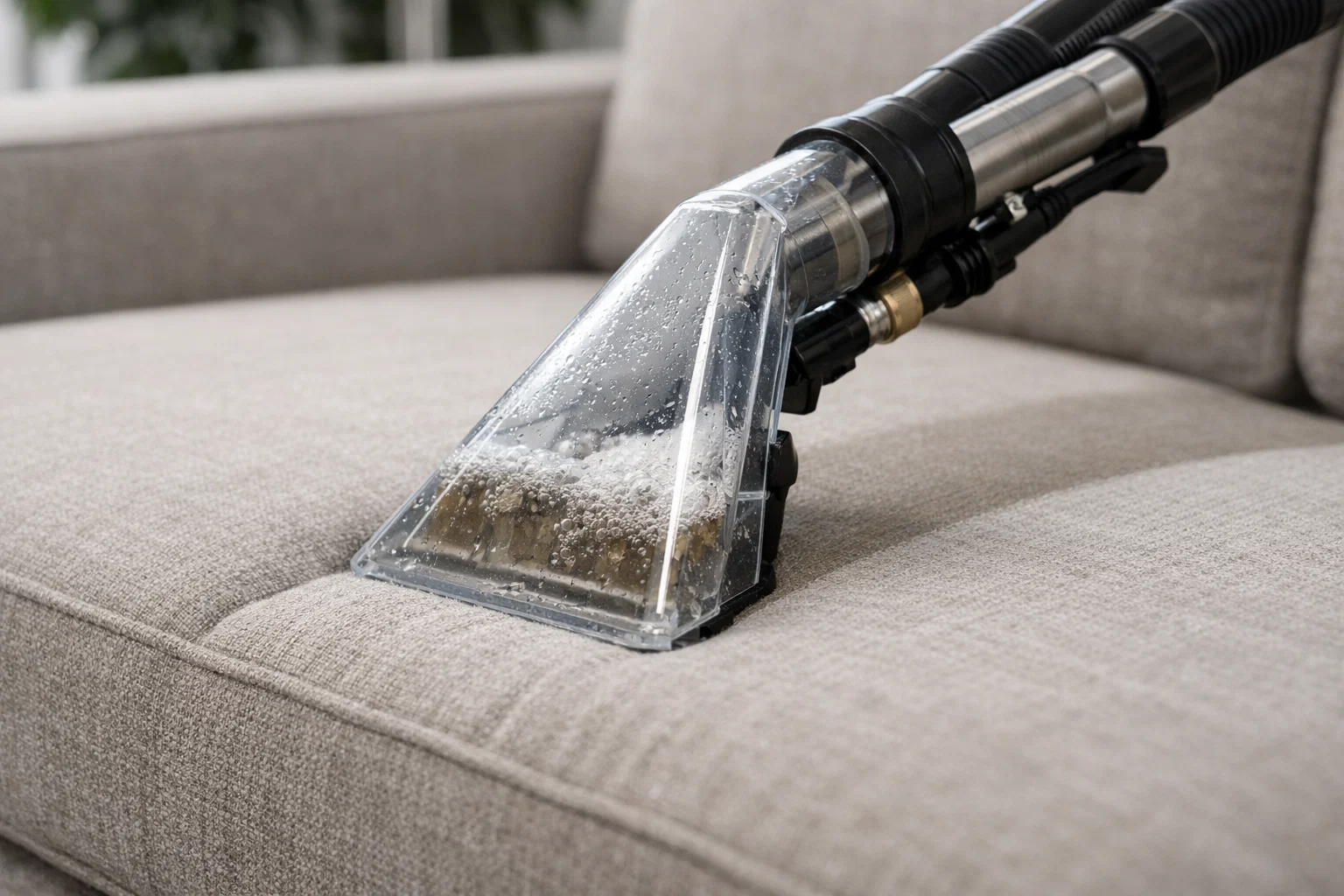
Professional hot-water extraction tool cleaning a sofa cushion with controlled moisture and strong recovery
Professional hot-water extraction uses controlled moisture and strong recovery to lift oils and rinse residues—without soaking the furniture.

What professional cleaning can help with

  • Body oil buildup on arms, headrests, and seat fronts.
  • Traffic shading from daily use (especially on light fabrics).
  • Food and beverage spots that leave sticky residue behind.
  • General “gray cast” caused by soil + DIY residue.

Pro tip: The best results usually come from a method that matches the fabric—not from “one process for everything.” That’s why testing and controlled moisture matter.

When low-moisture or specialty methods are the better choice

Not every fabric should be cleaned with hot-water extraction. Some materials are water-sensitive, and some textures can distort if over-wet. When the piece calls for it, a low-moisture approach can improve safety, shorten dry time, and reduce the risk of rings or texture change.
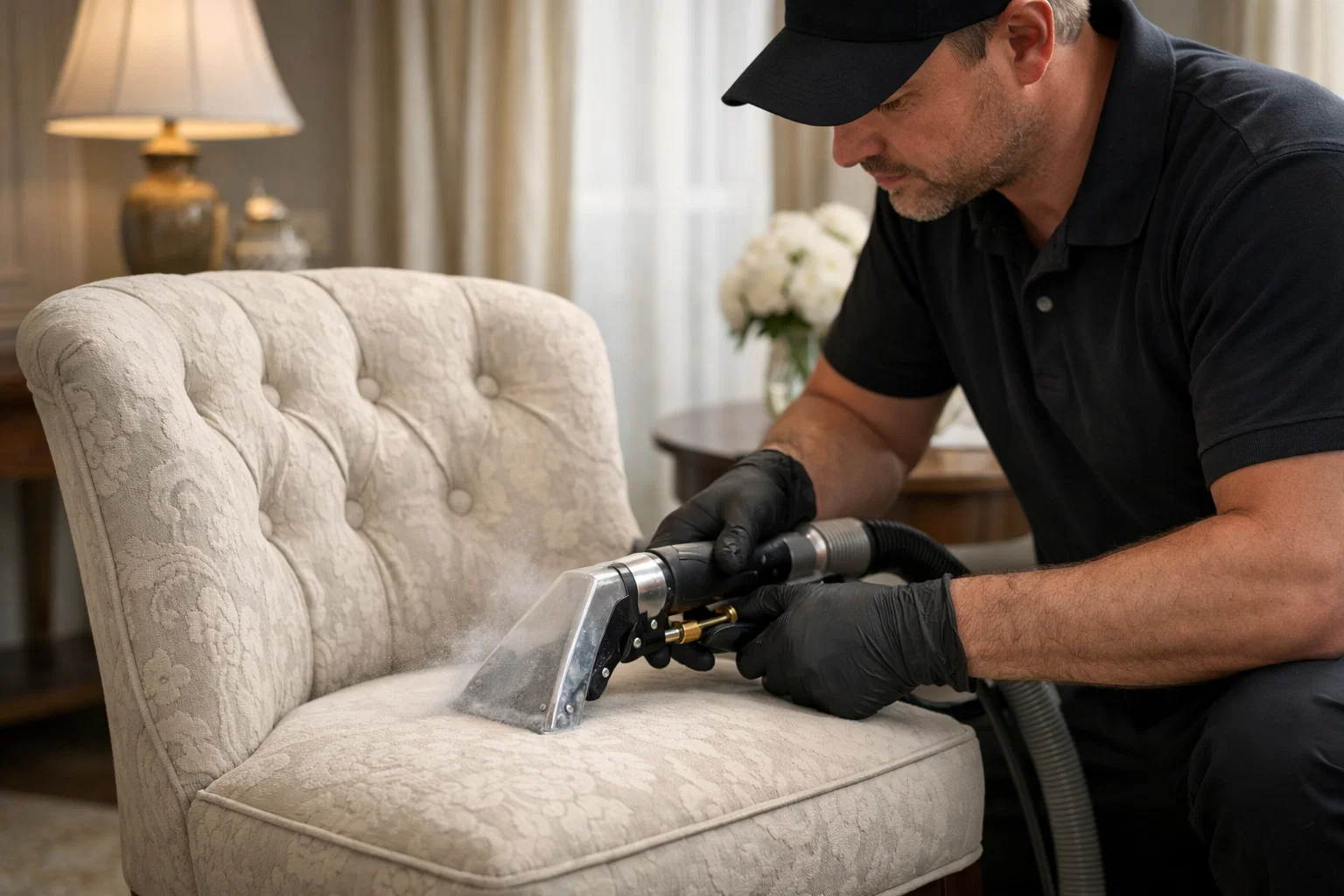
Low-moisture upholstery cleaning on a delicate fabric chair using specialized hand tools
Some fabrics respond best to low-moisture or specialized methods—testing guides the safest option.

How often should upholstery be professionally cleaned?

Frequency depends on use. A formal sitting room doesn’t need the same schedule as a “daily driver” couch. These guidelines help keep furniture looking better—and prevent buildup from becoming “permanent looking.”

  • Average households: every 12–24 months.
  • Kids + pets: every 6–12 months for high-use pieces.
  • Light colors / delicate textures: more frequent light maintenance is often better than waiting for heavy buildup.
  • After a big event: post-holiday or post-gathering cleanups can reset oils and spills before they set.

Fabric protection: what it does—and what it doesn’t

Fabric protection can be a smart add-on for frequently used pieces—especially in busy homes in Blue Bell and Royersford where spills happen during normal life. The goal isn’t to make a couch “stain-proof.” It’s to slow absorption so you have more time to blot, and to reduce how quickly dry soil bonds to fibers.
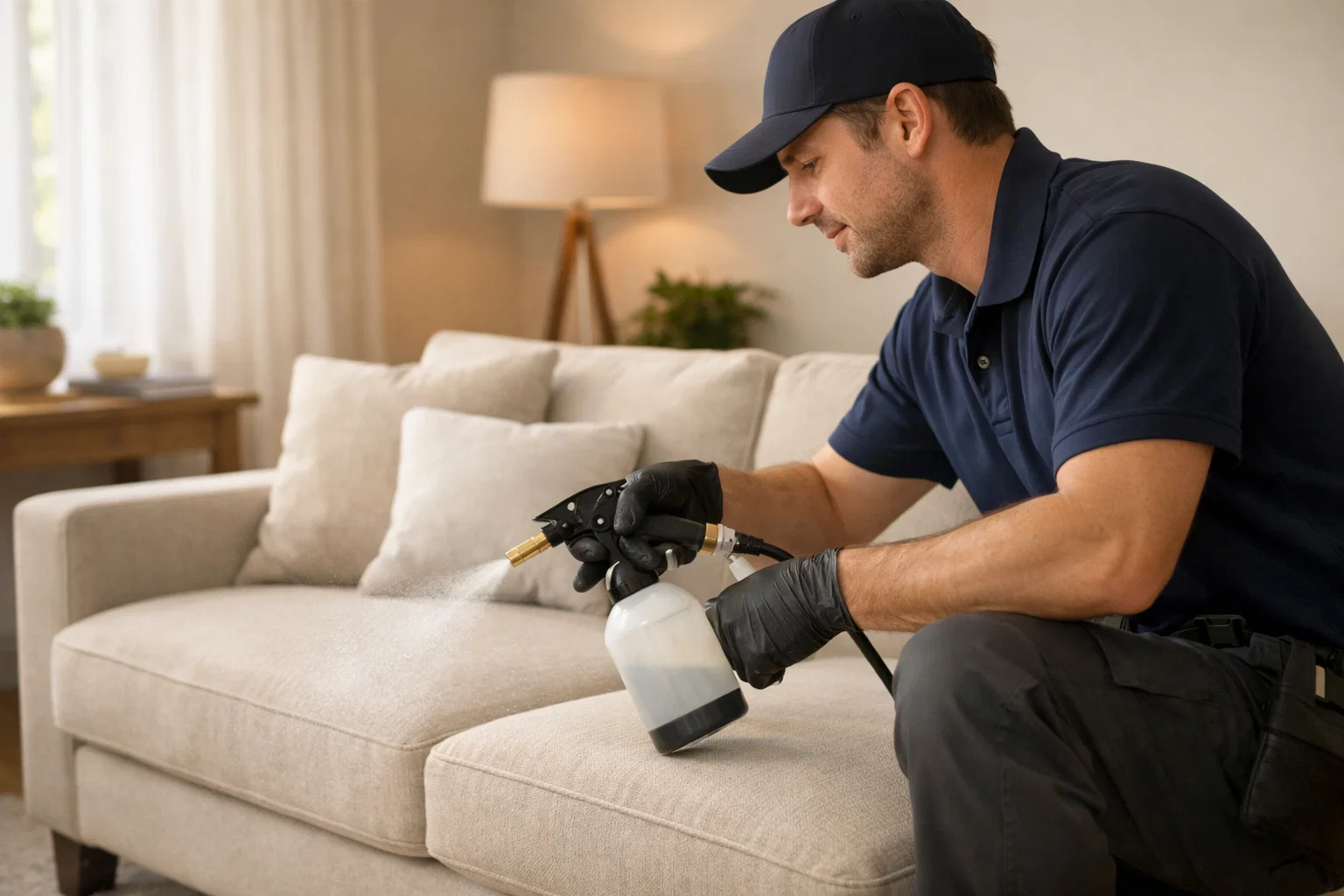
  • Helps with: slowing spills, improving blot-ability, reducing rapid re-soiling.
  • Does not do: prevent all staining (especially dyes), or replace proper cleaning.
  • Best timing: applied after cleaning on clean fibers for the best performance.
Applying fabric protector to a clean upholstered sofa to help repel spills and slow re-soiling
Fabric protection is most effective when applied after professional cleaning on clean fibers.

Local note: furniture care in Montgomery County living rooms

Many homes in King of Prussia, Blue Bell, and Royersford have open-concept “main rooms” where sofas and chairs see constant use. Upholstery ends up acting like a filter—collecting dust, oils, and daily contact faster than most people realize. Staying ahead of buildup with light routine care plus periodic professional cleaning is usually the most cost-effective way to protect furniture long-term.

Internal linking (related services): If your living room has rugs and carpet too, pairing services can create a true “reset”: Upholstery CleaningArea Rug CleaningCarpet Cleaning

How to prep for an upholstery cleaning appointment

  • Clear small items from the piece (throws, toys, remotes).
  • Point out problem areas (arms, headrests, pet zones, food spots).
  • Share the fabric tag info if you can find it (W / S / WS / X).
  • Plan airflow (fans / HVAC helps drying).
  • Keep pets comfortable in another room during service.
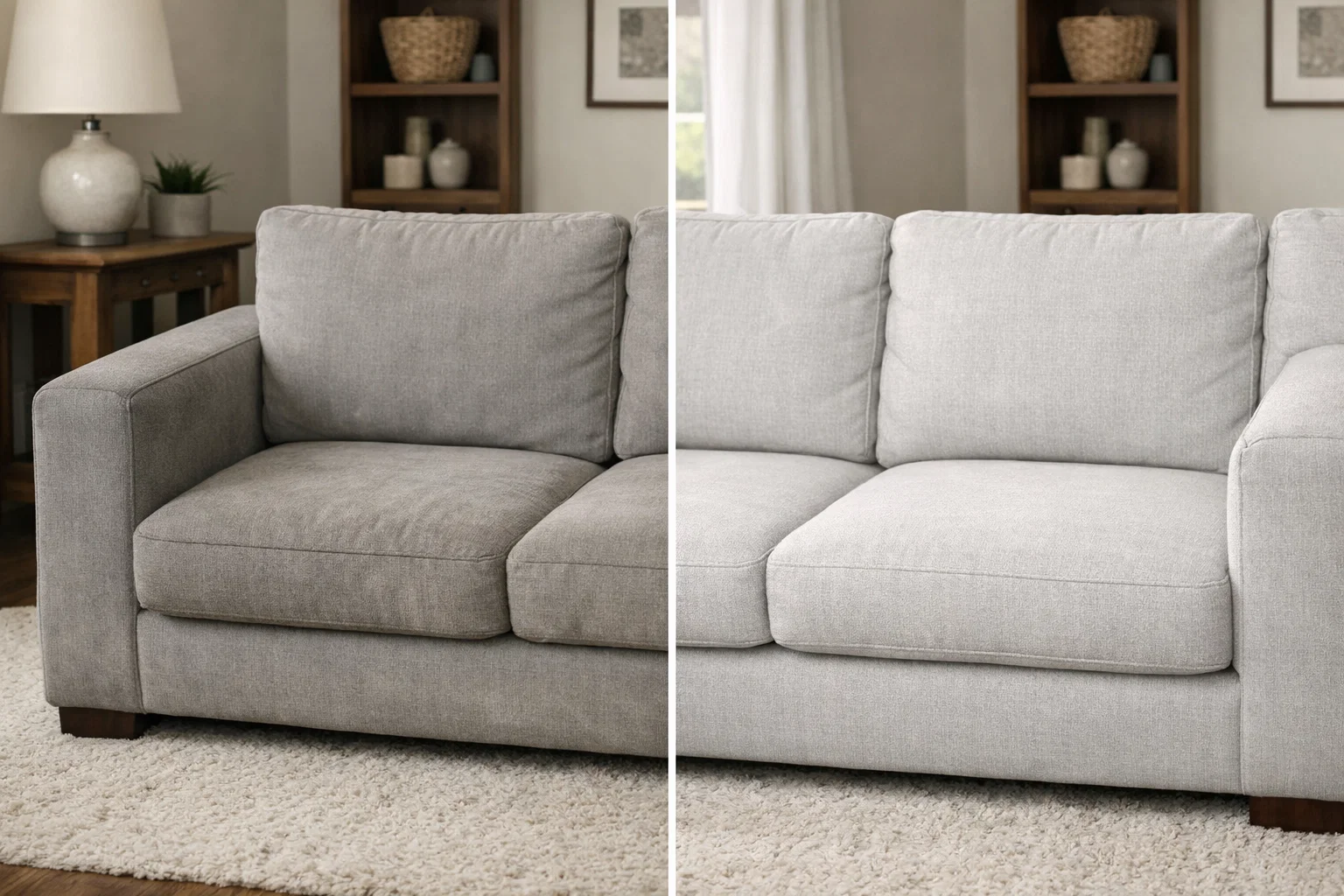
Before and after upholstery cleaning showing brighter fabric and restored texture on a sofa
Before/after: professional cleaning can brighten fabric, lift oils, and restore a more uniform look—especially on arms and seat fronts.

Your next steps

  • Identify your fabric type and look for the cleaning code tag.
  • Adopt a quick vacuum routine for seams and cushion edges.
  • Use safe blotting steps for spills—avoid over-wetting and scrubbing.
  • Schedule professional upholstery cleaning before buildup becomes “permanent looking.”

FAQ

Is hot-water extraction (steam cleaning) safe for upholstery?

It can be—when the fabric allows it and the process is controlled. Upholstery hot-water extraction uses careful moisture and strong recovery to lift soils and rinse residues without soaking the furniture.

Why do stains come back after DIY spot cleaning?

Usually because residue was left behind or the spill load was pushed deeper. Soap residues attract soil and can make the spot reappear darker over time.

How often should I have my couch professionally cleaned?

Many households do well with a 12–24 month schedule, but high-use homes (kids/pets) often benefit from 6–12 month maintenance on primary seating.

Do you serve King of Prussia, Blue Bell, and Royersford?

Yes—Angelo’s serves many nearby communities, including King of Prussia, Blue Bell, and Royersford, along with surrounding areas.

How long does upholstery take to dry?

Dry time depends on fabric type, soil level, method used, and airflow. Improving ventilation and using fans helps upholstery dry faster and more evenly.

Quick recap

  • Start with fabric ID and cleaning codes—don’t guess.
  • Vacuum seams and cushion edges weekly to slow wear.
  • Avoid scrubbing and over-wetting—blot and rinse lightly.
  • Professional cleaning (including hot-water extraction when appropriate) removes oils and residue that DIY methods leave behind.
  • Optional fabric protection can help slow re-soiling in busy homes.