
Dryer Vent Cleaning • Troubleshooting
If laundry suddenly needs two cycles, you’re probably dealing with airflow—not a dying dryer. Here are the telltale signs and the next steps.

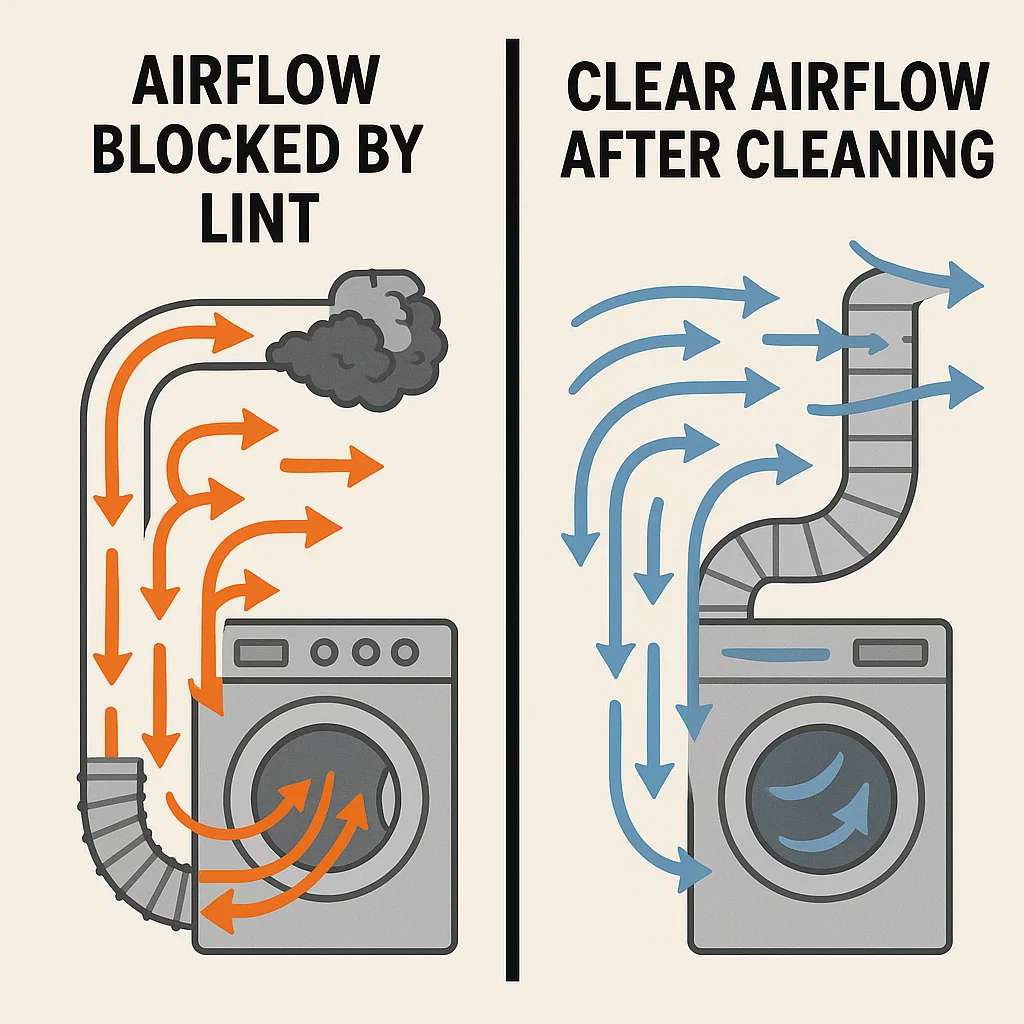
Dryers move air. That air absorbs moisture from fabrics and carries it out through the duct. If the exit path is narrow, kinked, or blocked, moisture lingers in the drum and cycles stretch. Turning up the heat doesn’t fix airflow; it just bakes fabric and stresses parts. Restoring a clear exhaust path is the cure.
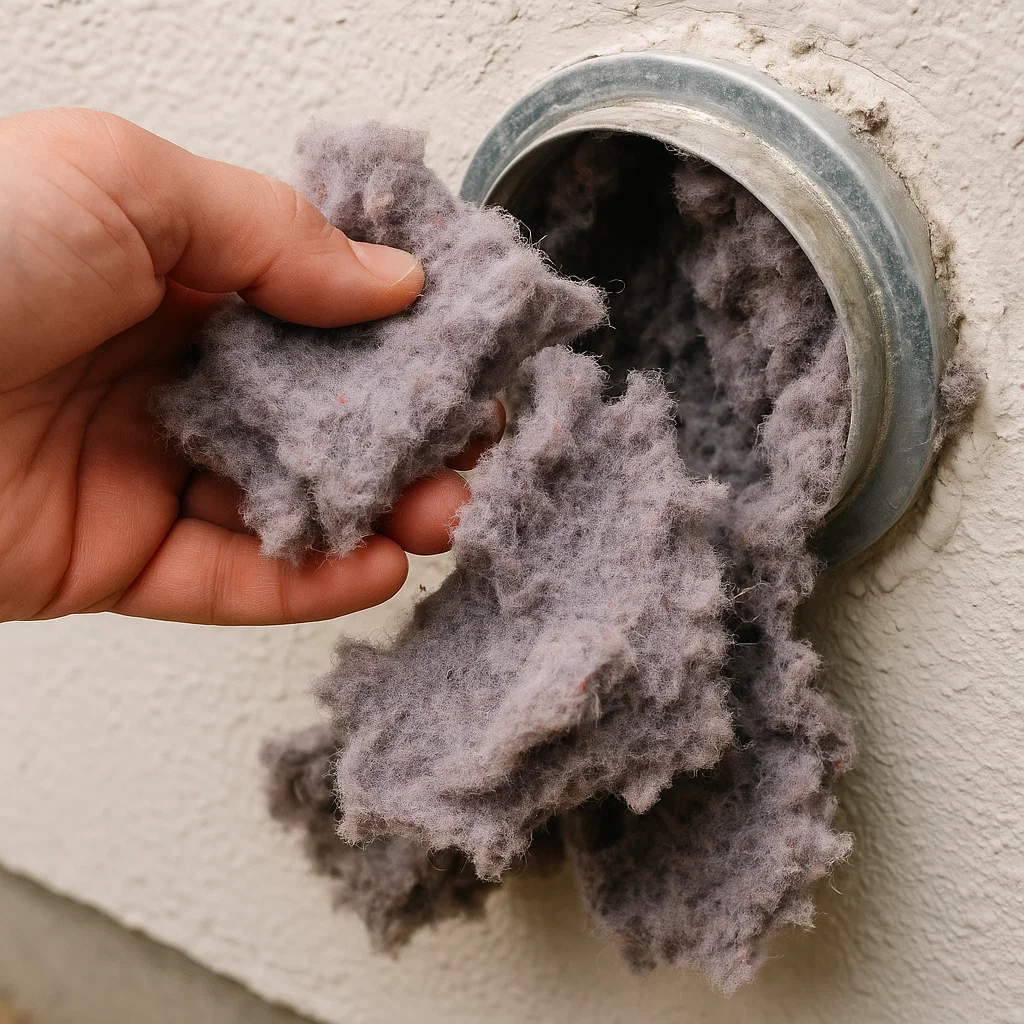
Lint settles where airflow slows or changes direction: elbows, long horizontal runs, and the termination cap. Accordion‑style foil behaves like a lint net; smooth rigid metal sheds debris and keeps friction lower. Add pet hair and heavy shedding fabrics and a plug forms faster than you expect.
A full service clears the entire system and verifies results. We inspect, disconnect carefully, agitate the duct with rotary brushing while capturing debris, service the appliance cavity and termination, and confirm strong airflow at the hood. If code issues are discovered—screened caps, screws in the airstream, plastic duct—we document fixes with photos.
If you smell burnt lint, see smoke, or feel the cabinet get uncomfortably hot, stop and call for service. Continuing to run a restricted system only adds heat and fuel to the problem.
No. Even new dryers struggle when the vent is restricted. Fix airflow first; then evaluate the appliance if problems remain.
With healthy airflow, many mixed loads finish in under an hour. If you’re consistently above that, the vent is the first suspect.
If you smell burnt lint, see smoke, or the cabinet is too hot to touch, stop using the dryer. We’ll clear the run, service the termination, and confirm airflow so you’re back to predictable cycles safely.
1) Longer cycles: When the vent is restricted, moist air stalls inside the drum. The dryer’s timer may keep running, but moisture sensors prevent the cycle from ending—so the dryer keeps tumbling, trying to hit its dryness target. That extra runtime is pure waste.
2) Hot but damp laundry: Air picks up heat quickly; moisture removal requires flow. If your clothes are hot yet damp, the heater is working and the blower is spinning—but the air can’t escape fast enough to carry moisture away.
3) Hot cabinet: The shell of the dryer should be warm at most. A hot cabinet signals that heat is soaking into the metal instead of leaving through the duct. Prolonged heat shortens the life of belts, bearings, and control boards.
4) Humidity or condensation: Steam that should exit outdoors rolls back into the room, fogging nearby glass or raising relative humidity. In tight closets you may see swelling at trim or cabinet doors over time.
5) Odors: A toasty smell points to fibers reaching hot surfaces. A swampy smell suggests damp lint clinging to the duct walls. Neither is normal.
6) Weak discharge at the hood: This is the most telling indicator. With the dryer running on high, you should feel a steady stream of air and see the damper open wide. If it barely moves, you’ve located the symptom.
7) Stray lint: Lint around the door gasket or on baseboards near the machine means the system is leaking under pressure, often at the transition connection.
Air slows at turns and where the duct is rough. That’s why elbows, long horizontal runs, and corrugated foil load first. Exterior hoods can stick partially closed—especially in winter—acting like a built‑in brake on every cycle. Rigid metal stays smooth and holds a constant diameter, which lets lint travel farther before dropping out of the airstream.
We start at the appliance, documenting the route and measuring equivalent length. After disconnecting safely, we use flexible rotary rods to scrub the duct from the laundry side and from the termination side where possible. A high‑flow capture hose collects loosened debris so it doesn’t blow into living spaces. We clean the lint cavity below the screen, service the hood, and verify airflow with the dryer operating. The final step is a review of photos and a quick plan to keep performance high.