
Hardwood Floor Cleaning • Safe Products
Skip steam, vinegar, and oily soaps. These pro‑tested habits keep modern finishes clean and bright.
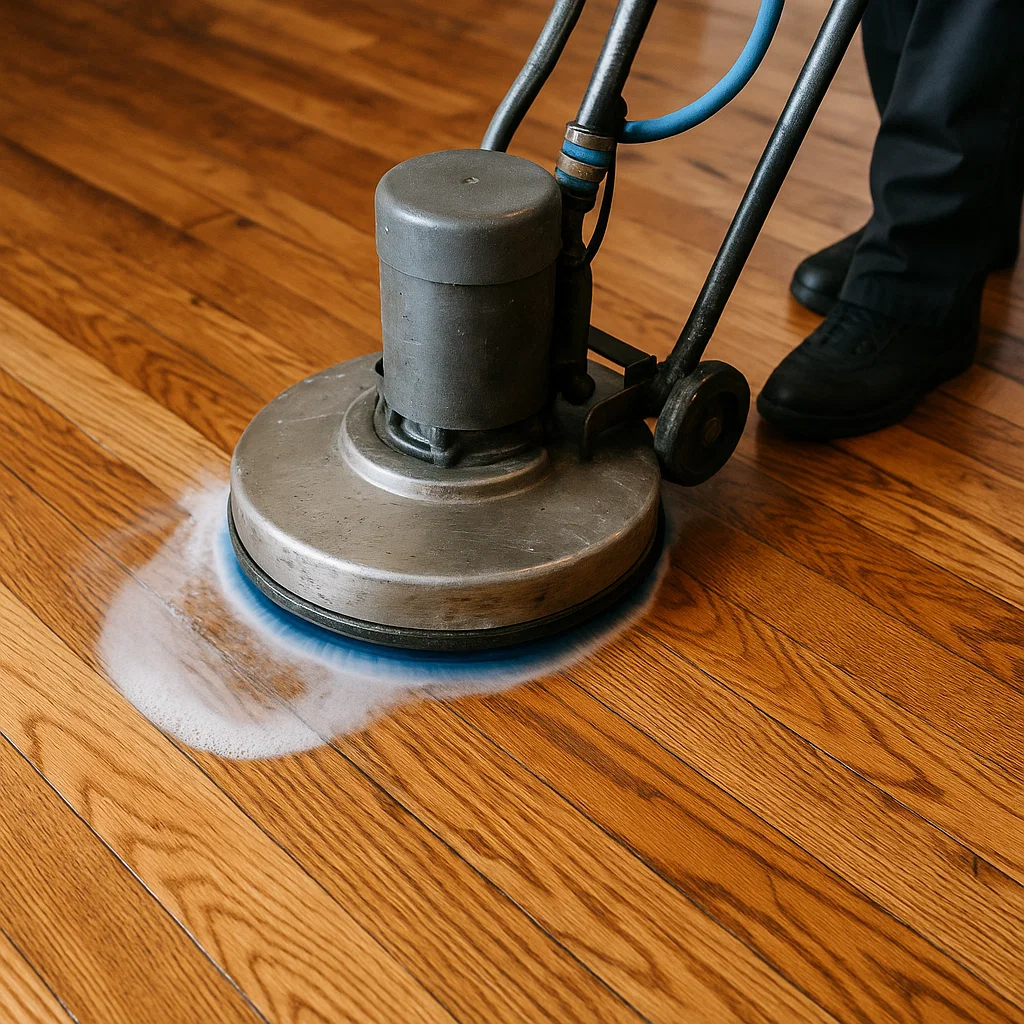
Vinegar is acidic. While it can cut grease, repeated use dulls modern urethane finishes by etching the surface and disrupting the gloss level. Over time, the floor looks cloudy even when it’s technically clean. The fix is to neutralize and remove that film, which is part of our professional process.
Steam drives heat and moisture into seams and small finish defects. Wood moves with humidity; forced steam can cause cupping, lifted edges, or finish failure. Manufacturers of many flooring products exclude steam damage from warranty coverage for this reason. Stick to low‑moisture methods instead.
Finished hardwood doesn’t need feeding—the clear coat is the barrier you walk on. Oil soaps leave a soft film that attracts dust and shows footprints. That residue is also what makes a professional clean such a dramatic before/after in kitchens.
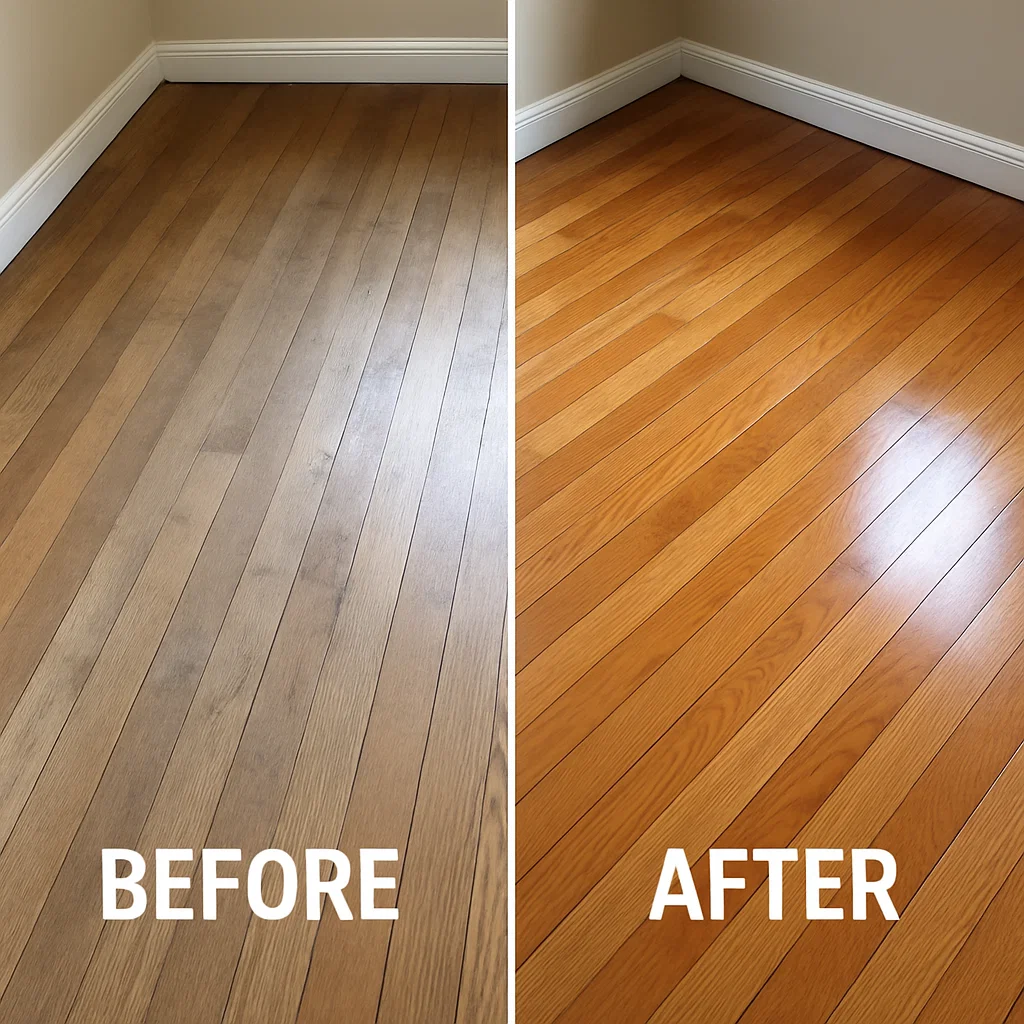

Two culprits: film‑forming products and micro‑grit. Most two‑in‑one “clean & polish” formulas deposit acrylics that briefly look shiny but quickly scuff and hold dirt. Grit works like ultra‑fine sandpaper, scratching the film and scattering light. Professional cleaning removes both layers so the finish can reflect light evenly again.
We recommend a ready‑made product labeled for polyurethane and factory‑finished hardwood. DIY mixtures are often too strong or leave residue. If you mix concentrate, follow the dilution chart precisely.
That’s usually residue or a pad that was too wet. Rinse pads frequently and use small amounts of cleaner. If the problem persists, a professional reset will remove the film.
No. A manufacturer‑approved refresher is a thin, compatible protective layer applied by pros. “Polish” products from the store are often acrylic films that are hard to remove.
Waxed floors are different. Let us know during the walkthrough; we’ll adjust methods or advise on next steps if stripping/refinishing is more appropriate.
Look for phrases like pH‑neutral, safe for polyurethane, and residue‑free. Avoid “adds shine,” “polish,” or “glow” unless you intend to apply a temporary coating. Concentrates should list precise dilution ratios; more is not better.
White rings. Usually moisture on the surface of the finish—often reversible with professional cleaning. Dark stains that follow the grain. Moisture reached the wood; that usually requires sanding. Gray traffic lanes. Almost always residue plus micro‑scratching above the finish; cleaning helps dramatically.