How Long Does Carpet Stretching Take? Prep, Process & What to Expect
Know the schedule before we arrive. This guide covers room prep, the pulling sequence, and when you can put furniture back.
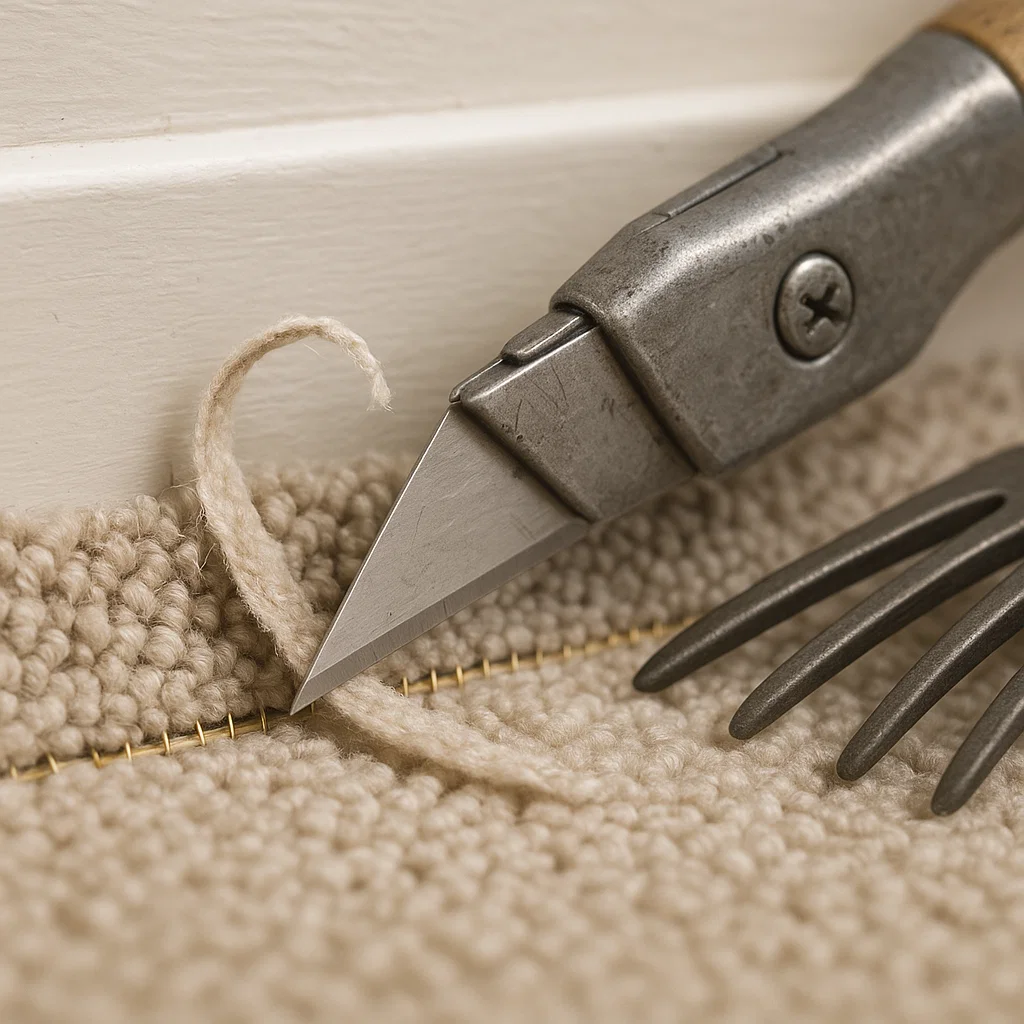
After stretching, excess edge is trimmed and tucked cleanly for a crisp wall line.
Typical timelines by room size
A straightforward bedroom with modest furniture often takes 60–90 minutes. Living rooms with sectionals or desks may take 90–120 minutes. Open concept areas or rooms with complex transitions can run longer. The biggest variables are furniture, how many pulls we need, and whether seams and thresholds require extra detailing.
What we do before we start
Walk‑through & plan: We map stretch direction and note seams, vents, and thresholds.
Protect & prep: Floors and corners are protected; we group furniture to one side using sliders.
Access strip: If tack strip is missing or damaged in a corner, we install or repair it so the new tension holds.
The stretching sequence
Set the head & poles. The power stretcher spans wall‑to‑wall; the head grips the pile without harming fibers.
Long‑direction pulls. We make incremental pulls along the longest dimension to remove major waves.
Cross‑pulls. We level remaining ripples across the width and fine‑tune around entries.
Trim & tuck. Excess is trimmed at the perimeter and tucked onto the tack strip; thresholds are re‑seated.
Groom. We brush the pile to erase tool marks and blend the edge.
How to prepare your room
Pick up small items, toys, and electronics.
Clear surfaces of fragile décor so we can shift furniture safely.
Make room on a nearby wall—we’ll slide grouped pieces there while we stretch.
Dry time? None.
Stretching doesn’t introduce moisture. You can walk on the carpet as soon as the room is put back together. If you plan to clean the carpet as well, schedule cleaning after stretching so the pile dries in its new, taut position.
What can extend the appointment
Replacing damaged tack strip or repairing loose metal thresholds.
Re‑bonding a split seam that appeared when slack was removed.
Moving unusually heavy or delicate furniture that requires extra care.
Room‑by‑room time guide
Small bedroom (10×12): 60–75 minutes with light furniture.
Primary bedroom (12×16): 75–110 minutes depending on furniture and thresholds.
Living room (open plan): 90–150 minutes with sectional/desk/entertainment center.
Hall with multiple doorways: 45–90 minutes; lots of small pulls and tucks.
Noise & dust
Stretching is about as loud as a vacuum for brief periods. Trimming creates minimal fiber dust which we capture as we go. There’s no chemical odor and no dry time.
After the appointment
Return furniture to normal locations immediately.
Expect slightly different pile direction near edges—grooming lines relax within a few days.
If a door threshold needed re‑seating, avoid dragging items over it for 24 hours.
Furniture questions, answered
We can shift most couches, chairs, and dressers with sliders. Delicate antiques, large aquariums, pianos, and similarly sensitive pieces may stay in place; we’ll stretch around them and return another day if you later decide to move them with a specialty mover.
Transitions and doors
Metal or wood thresholds are re‑seated at the new edge height. If a door rubs after stretching, we’ll discuss a minor trim by your contractor or handyman. Most doors clear without modification.
Guarantee & follow‑up
If normal use causes a ripple to reappear in an area we stretched, contact us. We’ll assess the cause—pad, humidity, or installation constraints—and make it right within the scope we outlined at your visit.
Full appointment timeline (example: primary bedroom)
If you’re planning carpet cleaning, schedule it right after stretching. If a small patch or seam re‑bond is also needed, we can usually complete that during the same appointment so the room goes back together once.
FAQ
Do you move beds and sectionals?
Yes, we can shift most furniture with sliders. Waterbeds, billiard tables, or large aquariums may require coordination.
Will the carpet be shorter at the closets?
We plan pulls so doorways and closets end up neat. If a closet edge needs extra attention, we re‑tuck and trim for a clean finish.
Can you stretch and clean the same day?
Yes—stretch first, then clean. That way the pile dries in the corrected position without fresh slack.
Scheduling tips for multi‑room projects
Group bedrooms on the same level so furniture can rotate between rooms while we work.
Empty dressers top drawers; leave hanging clothes—most pieces slide fine on sliders.
Stack lightweight items on beds or in tubs so floor space clears quickly.
Same‑day room reset
Because stretching is a dry process, rooms go back into service immediately. If you’re planning a gathering, schedule us for the morning—we’ll stretch, re‑seat thresholds, and the space will be ready the same afternoon.
What we need from you on arrival
Open parking spot near the entrance and a clear hallway to the room.
Access to a standard outlet for lighting and small tools.
Pets secured in another room—the stretcher looks interesting to curious noses.
Quick recap
Most rooms finish in 60–120 minutes depending on size and furniture.
We stretch long first, then cross‑pull, trim & tuck, and groom.
No dry time—walk on the carpet as soon as we’re done.